Address
Designed & handcrafted in Fuxin, China
Natural agate jewelry made by hand. Worldwide shipping available.
Work Hours
Monday to Friday: 7AM - 7PM
Weekend: 10AM - 5PM
OCT 19,2026
Chinese mythology jewelry is a modern design category that translates figures, stories, and visual traditions from Chinese culture into wearable objects. At Yun Agate, seven themes connect jewelry with Pangu, Gonggong, Jingwei, Xingtian, Chang’e, Nüwa, and Shennong. These pairings are contemporary creative interpretations, not an ancient system in which a particular deity or hero was assigned a fixed gemstone or color. Chinese mythology inspired jewelry is most useful when readers can see where historical evidence ends and contemporary design begins. Early texts can tell us what a surviving passage records. Later retellings can show how a story changed over time. A modern designer can then respond to those traditions through color, form, texture, and material. Readers who want to understand that creative approach can explore Yun Agate’s Chinese mythology design philosophy. This guide introduces the seven stories, explains the modern design themes, and provides a direct path to each full mythology article and collection.
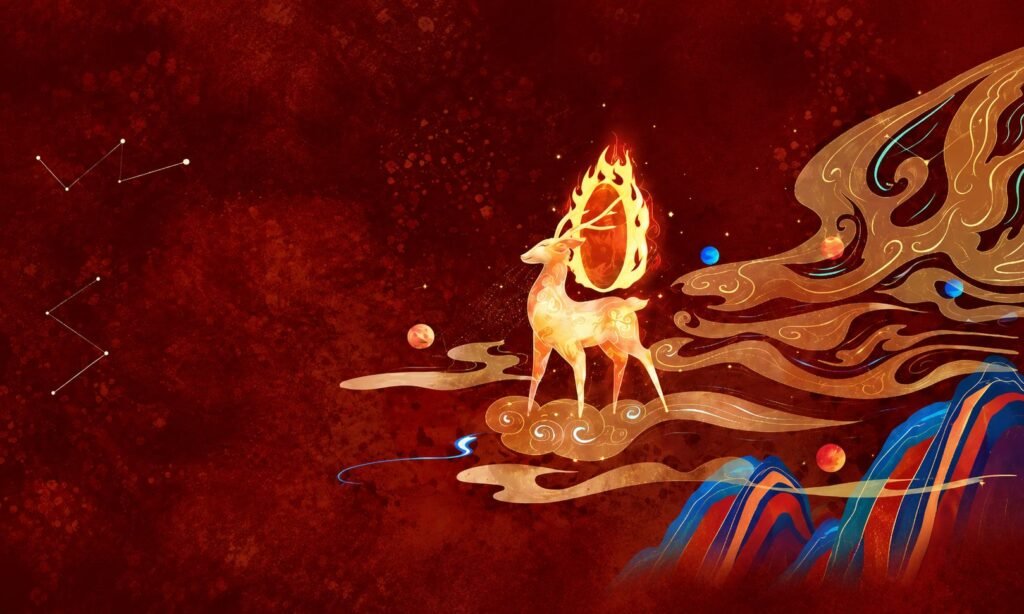
A source-aware design begins by separating three layers. The first is the early textual record: a concise passage may preserve a key action, figure, or image, but it rarely supplies every detail familiar today. The second is later tradition, including commentaries, literary retellings, festival narratives, theater, painting, and modern popular culture. Those layers may add motives, relationships, weapons, settings, or emotional themes. The third is the designer’s interpretation: a current choice of color, stone, shape, or composition made in response to the story.
Yun Agate’s seven themes belong to that third layer. Creation, disruption, persistence, defiance, memory, restoration, and discovery are design readings that can help a buyer choose a story with personal relevance. They should not be presented as guaranteed powers or as ancient gemstone correspondences. A piece may serve as a reminder of an idea, but it does not promise healing, protection, luck, energy, mental clarity, or any medical outcome.
Materials also vary by collection and by item. Some pieces use agate, while others may use aquamarine, clear quartz, amethyst, lepidolite, jadeite, moss agate, or other disclosed materials. For that reason, the live product page—not the mythology overview—is the source of truth for the exact gemstone, treatment, dimensions, metal or cord, care needs, price, and availability.
An early account attributed to the third-century writer Xu Zheng, preserved through later quotation, describes a primordial state likened to an egg, Pangu within it, and the gradual separation of clear yang as heaven and turbid yin as earth. Related textual traditions connect Pangu’s body with features of the cosmos, although the details vary. The axe now associated with Pangu is familiar in later visual culture; it is not stated in the earliest surviving passage and should be identified as later iconography when used. Yun Agate’s modern reading centers on beginnings, scale, separation, and the creation of order. Color or an axe-shaped motif is a contemporary design decision, not evidence of a traditional Pangu gemstone. Read the complete Pangu creation story or explore the Pangu-inspired jewelry collection.
In the Huainanzi, Gonggong contends with Zhuanxu for supremacy and, in anger, strikes Mount Buzhou. The damage to the cosmic supports explains why the sky inclines toward the northwest and why waters flow toward the southeast. The passage is compact. Expanded battles, dialogue, shame after defeat, and detailed motives belong to layered or later traditions. Crucially, this cited passage does not explicitly say that Gonggong caused the crisis repaired by Nüwa. For a contemporary design, the story can suggest disruption, consequence, imbalance, movement, and renewal. Dark color or turbulent form is Yun Agate’s visual interpretation; it is not proof that black agate historically belonged to Gonggong or provides protective effects. Read the full Gonggong mythology guide or visit the Gonggong collection.
The Shan Hai Jing identifies Yandi’s younger daughter as Nüwa (女娃). After she drowns in the Eastern Sea, she becomes the bird Jingwei, which repeatedly carries wood and stones from the western mountains to fill the sea. Jingwei is the bird’s name after the transformation, not the girl’s original personal name. The girl Nüwa (女娃) must also be distinguished from the creator goddess Nüwa (女媧). Later retellings often expand the short passage with dialogue, vows, or a more detailed revenge motive. Yun Agate interprets Jingwei through persistence, remembrance, and purposeful effort. Relevant Jingwei designs reviewed for this article use aquamarine or clear quartz, but materials may vary across the collection; consult each live product page for the exact composition. Read the complete Jingwei story or explore the Jingwei blue gemstone collection.
The Shan Hai Jing records that Xingtian contends with an unnamed sovereign or deity, loses his head, and is buried at Mount Changyang. He then uses his nipples as eyes and his navel as a mouth while dancing with shield and axe. Later interpretive traditions commonly identify the sovereign as the Yellow Emperor, but the early line itself does not name him. Saying that Xingtian “kept fighting” is a useful modern shorthand only if readers understand that the passage specifically describes his shield-and-axe dance. As a modern design theme, Xingtian can represent defiance, will, and persistence after loss. Those ideas are interpretive, not effects promised by a stone. Read the full Xingtian story or explore the Xingtian red agate collection.
A concise account in the Huainanzi says that Yi obtained the drug of immortality from the Queen Mother of the West and that Heng’e—later known as Chang’e—secretly took it and fled to the moon. The passage gives little explanation of motive. Familiar stories about an intruder, an act of self-sacrifice, permanent loneliness in a moon palace, or a fully romanticized marriage come from later or parallel traditions and should be presented as such, not folded into the early account as one original version. Yun Agate’s contemporary design reading emphasizes moonlight, distance, memory, change, and quiet reflection. White or translucent materials are visual choices rather than ancient prescriptions. Read the complete Chang’e mythology guide or visit the Chang’e white agate collection.
In the Huainanzi, a cosmic crisis leaves the world damaged. Nüwa refines five-colored stones to repair the sky, uses the legs of a giant turtle to support the four poles, kills a black dragon, and piles reed ash to control the floodwaters. That passage does not identify Gonggong as the cause. It also does not identify the five-colored stones as agate, purple agate, amethyst, or any specific mineral. Stories of Nüwa creating human beings belong to a separate transmitted tradition and should not be merged silently into the sky-repair account. Yun Agate interprets this story through restoration, balance, and creative renewal. The current purple gemstone collection may include amethyst, agate, and lepidolite; individual product pages govern exact composition. Read the full Nüwa mythology guide or explore the Nüwa purple gemstone collection.
The Huainanzi credits Shennong with teaching people to sow the five grains, examining soils, and tasting plants and waters so that people could distinguish what to approach or avoid. It also says that he encountered many poisons in a single day. The Xici tradition of the Book of Changes associates him with agricultural implements. Later stories add a detailed biography, transparent-belly imagery, named toxic plants, miraculous cures, and other episodes. These layers should not be treated as proof of modern pharmacological discovery or authorship of the received Shennong Bencao Jing. Yun Agate’s modern theme is observation, cultivation, experimentation, and discovery—not medical efficacy. The live collection is centered on moss agate and may include other disclosed materials. Read the complete Shennong story or explore the Shennong Moss Agate collection.
Start with the story rather than a promised effect. Pangu may appeal to someone marking a beginning or building order from uncertainty. Gonggong can suit a design centered on disruption and renewal. Jingwei suggests sustained effort; Xingtian, defiance after loss; Chang’e, memory and distance; Nüwa, restoration; and Shennong, observation and discovery. These are modern interpretive themes. Choose the one that feels relevant to the person, moment, or gift without presenting that connection as an ancient rule.
Next, read the live product specification. Confirm the exact gemstone and any additional materials, then check bead or pendant dimensions, bracelet fit, metal or cord components, care guidance, price, and availability. If you need mineral and jewelry context, use Yun Agate’s guide to agate types, properties, and jewelry use. Do not assume that every blue, purple, green, white, red, black, or yellow piece is the same stone, or that every item in a mythology collection is made from agate.
Treatment and authenticity deserve the same attention. The guide to checking whether agate is real explains practical identification boundaries, while the dyed agate treatment and care guide explains why color treatment and care can matter. For U.S. buyers, treatment disclosure is especially important when a treatment is not permanent, requires special care, or significantly affects value. Look for product-specific wording rather than assuming “natural” means untreated.
Finally, separate design meaning from material fact. A seller can explain that a contemporary piece was inspired by a myth and can describe the actual materials used. It should not turn a modern color choice into an undocumented ancient belief or promise protection, luck, healing, detoxification, immunity, spiritual vibration, or mental clarity. The strongest choice is one whose story, design, materials, and disclosure all remain clear.
Chinese mythology jewelry is modern jewelry inspired by figures, stories, symbols, or visual traditions from Chinese mythology. A design may respond to a character’s actions or to a later cultural image through color, shape, texture, or material. The term describes a creative relationship; it does not mean that the exact gemstone or design was historically worn for that figure.
No. Yun Agate’s seven pairings are contemporary design interpretations. Early texts support parts of the mythology, while later retellings and visual traditions add other details. The selected colors and gemstones express Yun Agate’s current design reading and should not be described as fixed ancient correspondences or as stones that historically belonged to a deity or hero.
Choose the story whose modern theme fits the person or occasion: creation and order for Pangu, disruption and renewal for Gonggong, persistence for Jingwei, defiance for Xingtian, memory and distance for Chang’e, restoration for Nüwa, or observation and discovery for Shennong. Treat these as personal design meanings, not guaranteed spiritual or physical effects.
No. Materials vary among collections and individual products. Verified examples include Jingwei designs using aquamarine or clear quartz; Nüwa designs using amethyst, agate, or lepidolite; and Shennong designs using moss agate with other disclosed materials. These examples do not describe every item in a collection. Always use the current product page for exact composition and availability.
Read the product description for a specific treatment disclosure and ask the seller when the wording is unclear. Color alone cannot reliably prove whether a stone is natural or treated. Check care instructions, because stability can vary by treatment. Yun Agate’s authenticity and dyed-agate guides provide practical context, but definitive conclusions may require qualified gemological testing.
Each section above links to a dedicated Yun Agate story article for the relevant figure. Those pages can cover source history, variants, and cultural context in greater depth than this overview. Use this article to compare the seven design themes, then follow the story link for the complete discussion or the collection link to review current jewelry and product specifications.
These concise references support the historical and gemstone-disclosure boundaries used in the article.
FEATURED PRODUCTS