Address
Designed & handcrafted in Fuxin, China
Natural agate jewelry made by hand. Worldwide shipping available.
Work Hours
Monday to Friday: 7AM - 7PM
Weekend: 10AM - 5PM
SEP 8,2026
Agate jewelry is valued for its color, pattern, and natural variation. Online, however, a polished bead may be natural, dyed, or made from an imitation material.
To tell if agate is real, use several visual clues and the seller’s disclosure—not one “magic” home test. This guide focuses on what you can reasonably check when buying an agate bracelet online.
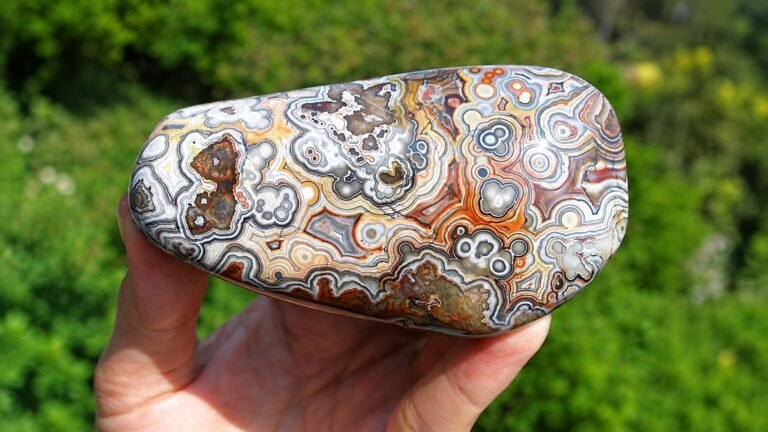
Natural agate usually shows depth and internal variation rather than a flat printed appearance. Depending on the variety, you may see curved bands, clouds, plumes, inclusions, translucent areas, or color transitions. Magnification may reveal round bubbles in glass or seams in molded resin and plastic.
These are clues, not proof. Glass can feel cool, genuine agate can be opaque, and dyed agate is still agate material. Combine appearance, product information, seller transparency, and—when warranted—professional testing.
“Real” is an imprecise word in gemstone shopping. Learning how to identify natural agate begins with separating three categories:
This distinction matters because many real vs fake agate guides call every brightly colored stone “fake.” According to the Gemological Institute of America’s treatment guide, chalcedony can be dyed, and detection may require a trained gemologist. Buyers need clear descriptions of both material and known treatment.
Turn the stone slowly under neutral white light. Natural patterns usually appear to continue into the material rather than sitting like paint on the surface. Bands may change thickness, curve, merge, or disappear. Moss-like and plume patterns tend to branch irregularly instead of repeating like a printed design.
Variation is not conclusive. A matched bracelet can have consistent colors, while some imitations are deliberately irregular. Pattern is only one part of the evidence.
Place a small flashlight behind the thinnest part of the stone. Many agates transmit some light at their edges or through lighter bands, revealing layers that are difficult to see from the front. Other areas may remain cloudy or opaque because of thickness, inclusions, or color.
An even glow can suggest glass but does not prove it. A dark bead that transmits little light is not automatically fake; varieties and cuts behave differently.
A 10× loupe can reveal details that product photography misses. Round bubbles inside a transparent material may point to glass. A molding line, peeling surface, or unusually soft-looking edge may suggest resin or plastic.
On strongly colored beads, examine drill holes, fractures, and pits. Dye can collect in these areas as darker patches or sharp color concentrations. Their absence does not prove natural color.
Judge an agate bracelet as both gemstone material and finished jewelry. Look across the strand: natural beads commonly vary in color, translucency, banding, and inclusions. Repeated internal patterns deserve closer examination, although consistent color can result from careful selection.
Also inspect drill holes, polish, and cord construction. Workmanship does not identify the stone, but it reveals attention to durability and finish.
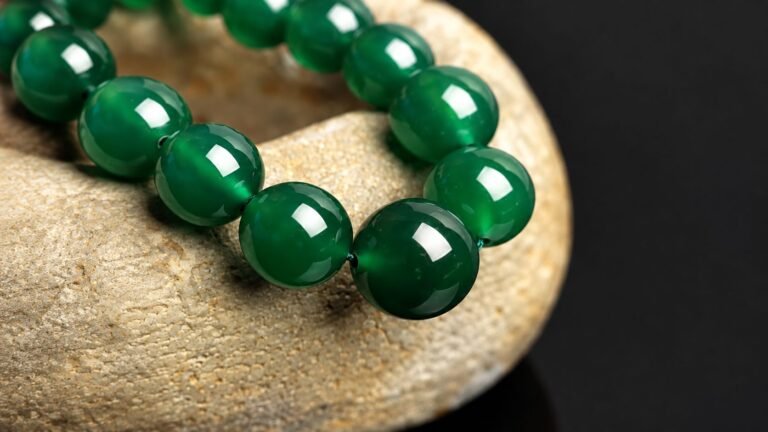
At Yun Agate, we work with natural agate materials and make our jewelry by hand in Fuxin, China. Real product photography allows buyers to examine visible color, pattern, bead variation, and construction before ordering. Natural differences are part of each bracelet’s character rather than flaws to be hidden. Because photographs cannot establish treatment status or provenance on their own, buyers should still read the material details on each product page.
Online buyers depend on the quality of the listing. Before purchasing an agate bracelet, look for:
U.S. Federal Trade Commission guidance emphasizes truthful gemstone descriptions and disclosure of treatments that materially affect value or require special care. Reviewing the FTC Jewelry Guides can help buyers understand why precise product language matters.
Searches for how to test agate stone often suggest scratching, flame, acid, solvent, or boiling water. These methods are unsuitable for finished jewelry and can damage beads, cords, dye, or surface finishes.
Agate belongs to the quartz family and has hardness near 7 on the Mohs scale. Hardness can narrow down material identity, but it cannot reveal whether the color is natural or verify an origin claim. A scratch test can also leave permanent damage.
Touch and weight are limited. Stone often feels cooler and heavier than plastic, but glass can too. Use these clues only for obvious lightweight imitations—not as confirmation of natural agate.
Many classic agates show visible banding, but not every commercially named agate displays obvious bands. Moss agate, for example, is recognized for branching, moss-like inclusions. Dark colors, small bead size, orientation, and polishing can also make patterns difficult to see.
Therefore, the answer to “does real agate have patterns?” is usually yes—but not always as clear stripes. Missing banding alone is not enough to reject a stone.
Authenticity is only one part of value. If you wonder how much real agate is worth, consider variety, pattern, size, condition, workmanship, treatment, and overall design. Natural does not automatically mean rare or expensive.
For an unusually valuable piece, independent examination by a qualified gemologist is more appropriate than home testing.
Before buying, ask yourself:
You can also explore Yun Agate’s handmade agate bracelets, learn more in our general guide to agate, or read about Fuxin’s agate heritage and craftsmanship.
Yes. A dyed stone may still consist of natural agate material, but its color has been altered. Sellers should distinguish treated color from natural color instead of describing both in the same way.
Photographs can reveal useful clues, including pattern depth, bubbles, seams, and color concentration. They cannot conclusively prove material identity, treatment, or geographic origin.
No. Scratch testing can permanently damage a polished bead and still cannot establish whether its color is natural. Use non-destructive observation and seller disclosure first.
Natural agate varies in color, translucency, inclusions, and pattern. Small differences between beads are normal and can make each finished bracelet visually unique.
Yes. A bracelet may intentionally combine naturally varied agate beads or different agate colors. Multiple colors do not indicate an imitation, but the product page should identify the materials accurately and disclose any known color treatment.