Address
Designed & handcrafted in Fuxin, China
Natural agate jewelry made by hand. Worldwide shipping available.
Work Hours
Monday to Friday: 7AM - 7PM
Weekend: 10AM - 5PM
SEP 14,2026
Nüwa (also written Nuwa or Nu Wa) is a major figure in Chinese mythology, best known for creating humans in one tradition and repairing heaven in another. These episodes survive in texts from different periods; later retellings often combine them into one narrative.
The Nüwa goddess is not simply the creator of the entire universe, and sources do not describe her uniformly. She is most consistently associated with human origins, restoration after cosmic disaster, and the preservation of life.
Nüwa, romanized Nǚwā and often written Nuwa in English, is commonly described as a creator and restorer. Some accounts say she forms human beings; others describe her repairing heaven after cosmic disorder. Traditional art often gives her a human upper body and a serpent-like lower body.
English-language sources often omit the diacritic and write Nuwa, so “Nuwa goddess” refers to the same figure.
Her role differs from Pangu’s. The Pangu creation myth centers on the formation and separation of heaven and earth. Nüwa’s traditions concern human creation and restoration in other mythic frameworks. Chinese mythology contains overlapping creation traditions, not one universal sequence.
The goddess Nǚwā should not be confused with Nǚwá, the daughter of Yandi who becomes Jingwei in the story of Jingwei filling the sea. Their Chinese names are 女娲 or 女媧 and 女娃, respectively. The romanizations look similar in English, but they refer to entirely different figures.
An early reference appears in Tianwen (“Heavenly Questions”) in the Chu Ci, or Songs of Chu. It shows Nüwa within an established mythic world but does not provide the full yellow-earth creation story or sky-repair account.
The Shan Hai Jing, or Classic of Mountains and Seas, contains other Nüwa-related material but is not the principal source for either familiar episode.
The Huainanzi, compiled in the second century BCE, preserves the best-known early sky-repair account. The human-creation story is associated with the Eastern Han Fengsu Tongyi and survives through later quotation, including in the Taiping Yulan encyclopedia.
Because the episodes come from separate textual layers, combinations should be read as retellings rather than a single original Nuwa myth.
In the transmitted Fengsu Tongyi tradition, humans did not yet exist, so Nüwa shaped people from yellow earth. When forming them individually became too demanding, she drew a cord through mud, and the scattered drops became more people.
The passage also attaches a social hierarchy to the methods: hand-shaped people are associated with the wealthy or noble, and cord-made people with the ordinary or poor. This belongs to one Eastern Han explanatory tradition, not a universal Chinese belief.
Popular versions add loneliness, a reflection, or dialogue. These are later storytelling elements, not details established by the transmitted passage, which centers on the two creation methods.
The Huainanzi describes a world in crisis: its supports fail, the land fractures, fire spreads, and floodwater rises. Nüwa melts five-colored stones to mend heaven, uses a great turtle’s legs as four supports, kills a black dragon, and checks the flood with reed ash.
Nüwa restores damaged cosmic order; she does not create the physical universe. Five-colored stones appear explicitly, but the text does not identify them as a particular gemstone. They should not be labeled agate, Purple Agate, or another mineral without evidence.
Readers can consult the Chinese Text Project’s Huainanzi and its Taiping Yulan quotation associated with human creation. Together they show that the famous episodes come through different sources.
Later retellings often connect the broken sky with Gonggong’s collision with Mount Buzhou. The Huainanzi repair passage itself describes the catastrophe without naming Gonggong as its cause.
The later connection shows how separate episodes were combined over time. It should still be distinguished from the repair story preserved in the Huainanzi.
Nüwa and Fuxi appear together in later textual, artistic, and regional traditions as paired ancestors, siblings, spouses, or a sibling-spouse pair. No single relationship is universal.
Surviving art strongly attests that they were represented together, often with human upper bodies and intertwined serpent-like tails. See the National Museum of Korea’s Fuxi and Nüwa artifact record.
Traditional art often gives Nüwa a human upper body and serpent-like lower body, especially beside Fuxi.
The image has no single universally documented meaning. Interpretations differ by period and source, so it should not automatically be labeled a symbol of fertility, rebirth, earth power, or one other idea.
The early sources do not supply a modern self-help moral. Modern interpretations often connect Nüwa with creation, restoration, renewal, and rebuilding order after catastrophe. In the repair tradition, she may be understood as protecting human life by making an endangered world habitable again.
These are interpretations, not a doctrine stated by every early text. They remain grounded in the acts the sources describe: forming life, repairing damage, and restoring stability.
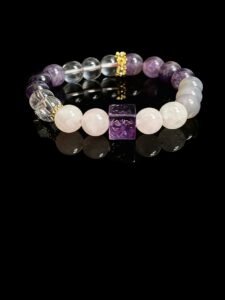
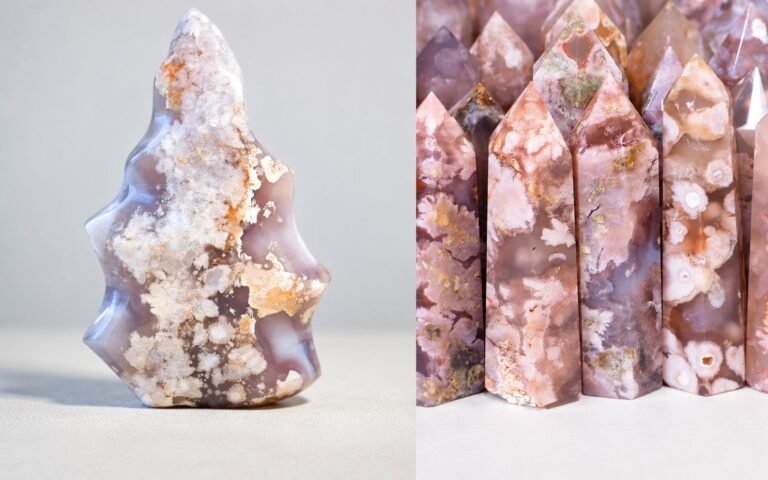
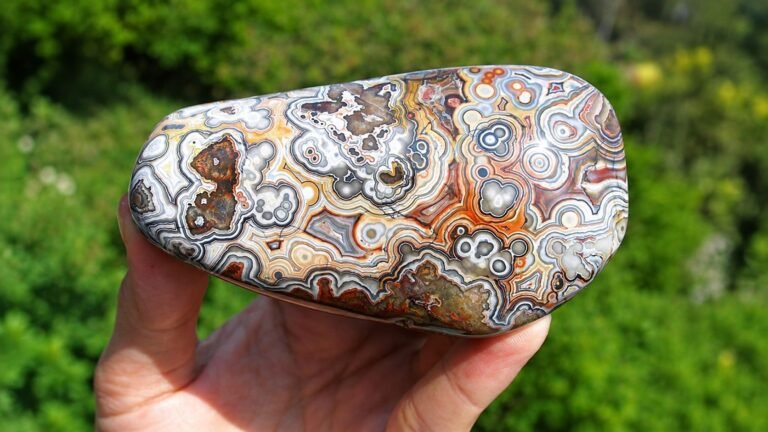
Yun Agate uses Nüwa as contemporary inspiration for jewelry designed, handcrafted, and assembled in Fuxin, China. Themes of restoration, color, and rebuilding shape the collection’s visual storytelling. The five-colored stones may inspire multicolored compositions, while purple, white, and varied natural materials create contrast across individual designs.
This is Yun Agate’s creative interpretation, not an ancient association between Nüwa and Purple Agate or any other gemstone. The early repair text does not identify the five-colored stones by mineral species, and the jewelry is not presented as carrying supernatural restorative power. Readers can explore the Nüwa-inspired jewelry or discover more Chinese mythology stories behind Yun Agate.
Nüwa is a mythic creator and restorer figure associated in different traditions with forming humans and repairing heaven after cosmic disaster.
In a tradition associated with the Fengsu Tongyi, Nüwa creates humans from yellow earth, first shaping them by hand and later using a cord through mud.
The Huainanzi says she melted five-colored stones to repair heaven and used a great turtle’s legs as supports. It does not identify the stones as a particular gemstone.
Later retellings often connect Gonggong’s collision with Mount Buzhou to Nüwa’s repair. The Huainanzi repair passage itself does not name Gonggong as the cause.
Their relationship varies. Different traditions present Nüwa and Fuxi as paired ancestors, siblings, spouses, or a sibling-spouse pair.
Traditional art frequently depicts her with a human upper body and serpent-like lower body, sometimes intertwined with Fuxi. The imagery does not have one universally documented meaning.
No. The goddess is Nǚwā, written 女娲 or 女媧. Jingwei’s human identity is Nǚwá, written 女娃; they are different figures.