Where Does the Gonggong Myth Come From?
Early References and the Huainanzi
The Tianwen, or “Heavenly Questions,” in the Chu Ci contains an early allusion associated with cosmic asymmetry. The clearest early account of Gonggong and Mount Buzhou appears in the Huainanzi, a composite work compiled in the second century BCE.
The Zuo Zhuan connects the Gonggong clan with water-named offices, while the Shan Hai Jing, or Classic of Mountains and Seas, contains genealogical material and the Xiangliu account. Together, they show why Gonggong mythology has no seamless version.
Why Different Versions Name Different Opponents
In the Huainanzi: Astronomical Teachings, Gonggong contends with Zhuanxu for rulership or supremacy. Other, separate traditions name opponents such as Zhurong, while some modern retellings introduce the Yellow Emperor.
These figures should not be substituted for one another. Zhuanxu belongs to this Huainanzi passage; other opponents belong to later or separate variants.
Gonggong and the Conflict with Zhuanxu
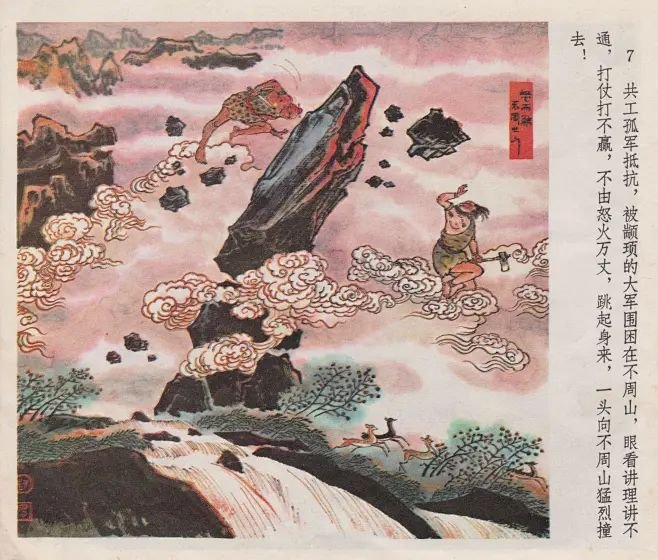
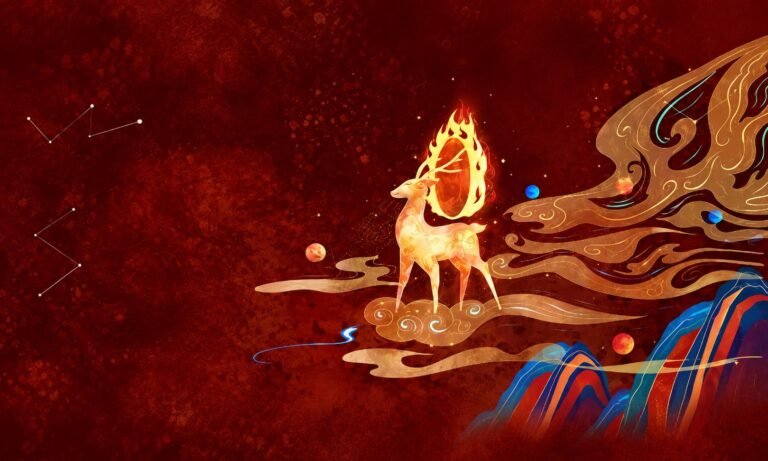
The Huainanzi states that Gonggong contended with Zhuanxu to become ruler. Gonggong then became angry and struck Mount Buzhou.
The concise passage confirms the contest, Gonggong’s anger, and the collision. It provides no long battle, dialogue, or detailed motive. Nor does it clearly say he first lost and then struck the mountain in shame. That sequence belongs to expanded retellings.
Why Did Gonggong Strike Mount Buzhou?
The Huainanzi says Gonggong struck Mount Buzhou in anger during his contest with Zhuanxu. It gives no more detailed motive.
Mount Buzhou is part of the cosmos’s supporting structure. When Gonggong strikes it, a heavenly pillar breaks and the earth’s supporting bonds are severed. This is mythological cosmology, not geology.
What Happened After Mount Buzhou Was Broken?
Why Heaven Tilts Northwest
The Huainanzi says heaven then inclines northwest, so the sun, moon, and stars move in that direction. This mythological explanation should not be presented as modern astronomy.
Why Waters Flow Southeast
The earth is described as deficient toward the southeast, so waters, floods, dust, and sediment gather there. The story makes the landscape’s unevenness a lasting consequence of cosmic conflict.
Was Gonggong a Water God?
Gonggong is strongly associated with water, although “water god” is a convenient modern label rather than a complete description of every early tradition.
The Zuo Zhuan account says the Gonggong clan named its offices after water. Other Huainanzi traditions associate Gonggong with surging floodwaters. These links support his water identity, but Chinese flood mythology contains several narratives and causes; Gonggong did not cause one universal “Chinese Great Flood.”
The Shan Hai Jing also identifies Xiangliu as Gonggong’s minister. In its Xiangliu passage, the creature has nine human-faced heads and a serpent body and leaves damaged, waterlogged land behind. Those nine heads belong to Xiangliu—not Gonggong.
Did Gonggong Cause Nüwa to Repair the Sky?
Later retellings connect Gonggong’s collision with Mount Buzhou to Nüwa’s repair of heaven. The major early Huainanzi repair passage describes damaged supports, fire, flooding, five-colored stones, turtle legs, a black dragon, and reed ash—but does not identify Gonggong as the cause.
Later narrative traditions often join the episodes, but they do not appear as one continuous account in the major early passages discussed here.
What Does Gonggong Symbolize?
Water, Disruption and Cosmic Disorder
The early texts state no authoritative moral. Modern interpretations connect Gonggong with uncontrolled water, rebellion, resistance to authority, and anger whose consequences exceed the original conflict.
His strike suggests disruption with irreversible consequences: the world continues, but its structure is altered.
Destruction and Renewal as a Modern Interpretation
Gonggong is neither simply a heroic freedom fighter nor a one-dimensional villain. Renewal after destruction is a contemporary interpretation, not a moral prescribed by the early texts.
His continuing importance lies in the tension between immense power, damaged order, and an altered world.
Gonggong in Yun Agate’s Contemporary Design Story
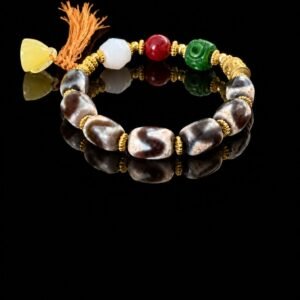
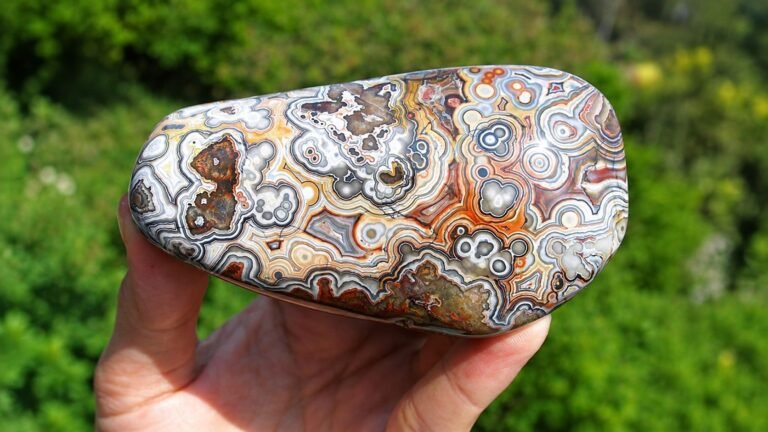
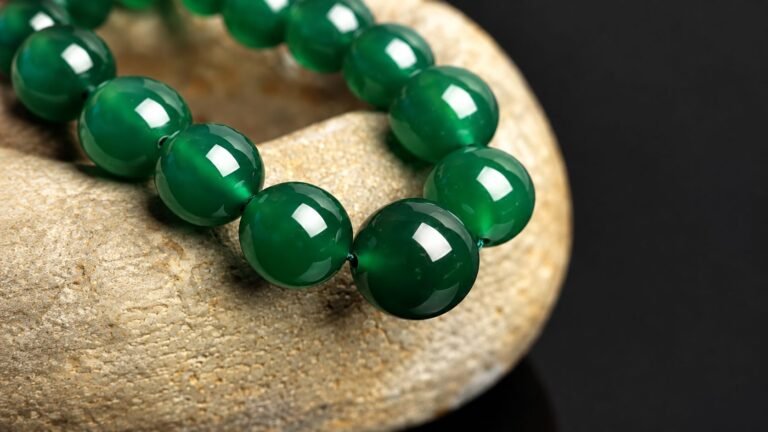
Yun Agate interprets Gonggong through contemporary jewelry design rather than an ancient gemstone association. In the current Gonggong-inspired jewelry collection, dark tones, sharp contrasts, flowing arrangements, and turbulent textures may recall water, disruption, and the altered order that follows the Mount Buzhou story. Designs may combine Black Agate with other agates, Dzi, agarwood, Liuli, or mixed materials; the collection is not exclusively Black Agate. Yun Agate designs, handcrafts, and assembles its jewelry in Fuxin, China. The connection between Gonggong, these materials, and themes of destruction or renewal is Yun Agate’s modern creative interpretation—not an ancient Chinese belief that Gonggong was historically linked to Black Agate.
Frequently Asked Questions
Who is Gonggong in Chinese mythology?
A water-associated mythic figure, Gonggong also appears as a ruler, rebel, clan figure, or agent of cosmic disorder.
Is Gonggong a water god?
“Water god” is useful shorthand, but not his only identity in every early source.
Who did Gonggong fight?
The Huainanzi names Zhuanxu. Other traditions name Zhurong or introduce the Yellow Emperor.
Why did Gonggong strike Mount Buzhou?
The Huainanzi says he struck it in anger during the contest. It does not clearly place the collision after a defeat.
What happened after Mount Buzhou broke?
A heavenly pillar broke, heaven tilted northwest, and the earth became deficient toward the southeast.
Did Gonggong cause Nüwa to repair the sky?
Later retellings connect them; the major early repair passage does not name Gonggong as the cause.
What does Gonggong symbolize?
Modern interpretations connect him with uncontrolled force, rebellion, cosmic disorder, and irreversible disruption—not one stated ancient moral.