Address
Designed & handcrafted in Fuxin, China
Natural agate jewelry made by hand. Worldwide shipping available.
Work Hours
Monday to Friday: 7AM - 7PM
Weekend: 10AM - 5PM
OCT 10,2026
Dyed agate can still be genuine agate. The treatment changes or intensifies the stone’s color; it does not automatically turn the underlying material into an imitation. For buyers, the important questions are separate: Is the material actually agate? Is the color natural or treated? And has the treatment been described accurately?
This guide focuses on color treatment. It explains how dyed agate differs from naturally colored agate, which observations may justify asking more questions, and why photographs or home tests cannot prove treatment status in every case. For glass, resin, plastic, hardness, and other general authenticity checks, use Yun Agate’s separate guide to how to tell if agate is real.
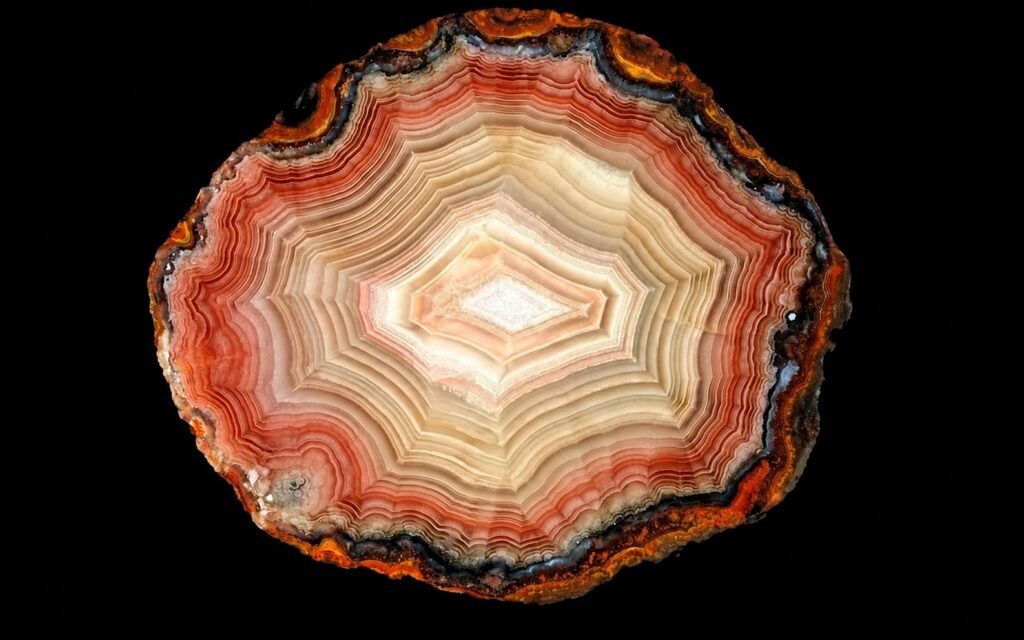
Dyed agate starts as genuine agate—chalcedony with the characteristic structure or patterns of agate—and is then color-treated. After treatment, it remains genuine agate, but the origin of its color is no longer entirely natural.
That distinction prevents several common misunderstandings. Naturally colored agate formed with its visible color through geological processes. Dyed agate received added color after it was mined. An imitation is different again: it may be glass, resin, plastic, or another material made to resemble agate. The words “genuine agate” can describe material identity without answering whether the color is natural, treated, or unknown.
Readers who want broader mineral background can start with what agate is and how it forms. For this article, the key point is that material identity and color origin require separate descriptions.
Agate is dyed to create colors that are stronger, more uniform, or easier to match across beads, slices, cabochons, and decorative objects. Treatment can make pale material more visually dramatic or help a jewelry maker assemble pieces with a consistent color direction. Dyeing is not inherently deceptive. The problem arises when treated color is presented as natural color or when relevant care information is withheld.
At a high level, dyeing introduces coloring agents into areas of gem material that can receive them. The Gemological Institute of America’s treatment guide describes dyeing as adding color to porous or fractured gem materials and identifies chalcedony among the materials that may be treated. Different areas of one stone can respond differently, so added color may appear stronger in receptive bands, surface-reaching fractures, pits, or drilled areas.
The exact method and stability depend on the treatment. A buyer does not need a chemical recipe to make an informed decision. What matters is whether the material and treatment are described clearly, whether special care is needed, and whether a significant natural-color claim can be supported.
No single color, pattern, or photograph can settle every natural-versus-dyed question. The observations below are useful as prompts for closer inspection and seller questions. They are not a substitute for documented treatment information or professional testing when the answer materially affects value.
What to observe | What it may suggest | Why it is not proof |
Unusually strong saturation | Added color may have intensified the appearance. | Natural agate can also show strong or unexpected colors. |
Very uniform color | Treatment may have been used to standardize a batch or strand. | Careful matching and natural similarity can also produce consistency. |
Color concentrated in fractures | A coloring agent may have collected in surface-reaching openings. | Natural staining and inclusions can also follow fractures. |
Darker color in pits or porous areas | More receptive areas may have absorbed additional color. | Surface texture, polish, dirt, and lighting can change what is visible. |
Stronger color around drill holes | Drilled or exposed areas may reveal uneven color distribution. | Drilling residue, shadows, and bead geometry can create a similar effect. |
Little variation between beads | A treated strand may have been selected for uniformity. | Natural beads can be closely matched, and treated beads can still vary. |
Clear seller disclosure | The seller is identifying known treatment status. | A statement is useful buying information, but it is not the same as laboratory analysis. |
Begin with the stone as a whole. A color that looks unusually saturated, perfectly even, or very consistent across many beads may justify asking whether it was treated. Then look more closely at fractures, pits, edges, band boundaries, and drill holes. Localized areas of stronger color can be a clue because coloring agents may enter some regions more readily than others.
Treat every clue as conditional. Strong color alone does not prove dyeing. Pale color does not prove that a stone is untreated. A dark line in a fracture may be dye, but it may also come from natural minerals, residue, shadow, or the way the stone was photographed. The absence of obvious color concentration is equally limited: a well-executed or stable treatment may not leave a clear sign visible to an untrained buyer.
Blue is a common example in treatment discussions, but naturally blue and blue-gray agatic material also exists. Yun Agate’s guide to natural and dyed blue agate covers that color-specific question without turning vivid color into automatic proof.
Product photography can reveal useful details, especially when it shows the actual piece from several angles in neutral light. It can also mislead without anyone intending to do so. Camera exposure, white balance, editing, studio lighting, reflections, background color, and the viewer’s screen can all change saturation and contrast. Subtle treatment may be invisible, while a natural stone may look more intense in a photograph than it does in person.
Home solvent tests have similar limits. Some dyes may react to alcohol or acetone, while other treatments may not. A negative swab does not establish natural color. Solvents can also affect dyed stone, polish, cord, adhesives, plated metal, coatings, or other materials in a finished piece. For that reason, acetone, alcohol, acid, boiling, flame, scratching, and cutting are not appropriate routine tests for finished jewelry.
If treatment status would materially change a high-value purchase, an important natural-color claim, or a resale decision, ask whether a qualified gemologist or laboratory can examine the piece. Professional testing is not necessary for every ordinary bead strand, but it is more proportionate than damaging a finished object or treating one visual clue as certainty.
Yes. Dyed agate can still be genuine agate material. “Real” describes what the stone is; “dyed” describes what happened to its color. A complete description may therefore identify both the material and the treatment, such as “genuine agate, dyed” or “agate with color treatment.”
This answer does not confirm that every colored object sold as agate is genuine. When the underlying material is uncertain, review how to tell if agate is real. That guide owns the separate questions of agate versus glass, resin, plastic, and other imitations.
Start with the listing. Look for separate statements about the material and its color treatment. Terms such as “genuine,” “natural stone,” or “real agate” may identify the material without stating whether the color is untreated. If treatment matters to you, ask a direct question: Is the color natural, dyed, otherwise treated, or unknown?
Use actual-product photographs when available. Compare several angles and inspect areas around drill holes, surface pits, fractures, edges, and visible bands. Ask whether the photographs show the exact item or a representative sample. Remember that the goal is not to diagnose the treatment from a screen; it is to notice details that support a more precise conversation with the seller.
A responsible seller can explain what is known and what is not. Treatment history may be documented by a supplier, established through testing, inferred from the trade, or simply unavailable. An honest “unknown” is more useful than an unsupported guarantee. For a significant purchase, preserve the product description and the seller’s written answer so that the representation remains clear.
For U.S. buyers, treatment disclosure is especially relevant when a treatment is not permanent, creates special care requirements, or significantly affects value. The FTC Jewelry Guides and the FTC’s plain-language In the Loupe guidance explain these principles. This is practical consumer context, not legal advice.
Some dyed agate can fade or change over time, depending on the coloring agent, treatment method, stone, and exposure. GIA notes that some dyes can be affected by solvents and that some may fade after prolonged ultraviolet exposure. Other treatments can remain stable through ordinary use. A universal promise that dyed agate will fade, or will never fade, would be inaccurate.
Use conservative care. Limit prolonged direct sunlight, avoid harsh household chemicals and solvent-based cleaners, and do not soak the piece unnecessarily. Wipe jewelry gently with a soft, slightly damp cloth, dry it, and consider every other component in the design, including cord, adhesive, metal, wood, or softer gemstones.
For a broader routine that accounts for mixed-material jewelry, see Yun Agate’s guide on how to care for agate jewelry.
Treatment can affect value, particularly when untreated color is rare, collectible, or central to how the piece is represented. It does not create a universal discount. A well-disclosed dyed agate may be attractive, durable enough for its intended use, carefully cut, and thoughtfully designed. An untreated stone is not automatically more valuable if its pattern, condition, workmanship, or appeal is poor.
Value can also depend on material quality, pattern, translucency, size, condition, cut, polish, craftsmanship, design, provenance, and the reliability of any origin or treatment claim. Compare like with like, and avoid paying an untreated-color premium when the description does not support it.
For the broader framework, read how treatment fits into agate value. That guide explains value factors without turning dyed agate into a fixed price category.
After treatment questions are clear, buyers can compare design, fit, materials, and workmanship in Yun Agate’s handmade agate bracelets. Read each product description for its own material information; a collection link does not imply that every item is untreated.
Not necessarily. Dyed agate can be genuine agate material with treated color. It should be distinguished from an imitation material and described accurately.
Strong or unusually uniform color, or color concentrated in fractures, pits, band edges, or drill holes, may suggest treatment. None of these observations proves dyeing in every case. Combine visual clues with seller disclosure and professional testing when warranted.
Some dyes may fade with prolonged ultraviolet exposure or be affected by solvents and harsh cleaners. Stability varies, so use gentle care and follow any treatment-specific instructions from the seller.
No. Color transfer may support a treatment conclusion, but no transfer does not prove untreated color. Acetone can also damage stone treatment, polish, cords, adhesives, finishes, or settings, so it is not recommended as a routine test on finished jewelry.
No color alone proves treatment. Highly saturated or unusually uniform color can justify a closer look and a direct seller question, but natural agate has a varied color range and photographs can alter how color appears.
Not by a fixed amount and not in every comparison. Treatment can influence value, but pattern, quality, size, condition, workmanship, design, provenance, and accurate disclosure also matter.
A seller should describe the material and known treatment accurately. Under FTC guidance, disclosure is particularly relevant when treatment may not be permanent, requires special care, or significantly affects value.
These sources support the treatment, care, and U.S. disclosure principles used in this guide.
GIA — An Introduction to Gem Treatments — Dyeing, detectability, durability, and care.
FTC — Jewelry, Precious Metals, and Pewter Industries Guides — U.S. treatment-disclosure framework.
FTC — In the Loupe: Advertising Diamonds, Gemstones and Pearls — Consumer-facing explanation of treatment disclosure.
International Gem Society — Common Gemstone Treatments Cheat Sheet — General treatment context for agate and other gems.
FEATURED PRODUCTS