Who Is Pangu?
Pangu, also written Pan Gu or P’an-ku, is best understood as a cosmogonic figure: a being connected with the formation of the cosmos. Modern English accounts may call him a god, a giant or a primordial being, but no single label captures every version of Pangu mythology.
His central role is standing at the beginning of an ordered universe, when heaven and earth become distinct, rather than ruling the world afterward.
Where Does the Pangu Creation Myth Come From?
The Sanwu Liji and Its Surviving Quotations
The earliest widely cited written account is associated with Xu Zheng, a third-century author, and his Sanwu Liji. The original work is lost. Its Pangu material survives because later works quoted it, including the Tang-dynasty encyclopedia Yiwen Leiju, compiled in 624 CE.
Readers are therefore not working from a complete original manuscript. Gábor Kósa’s study of Pangu’s textual transmission explains how the birth and death episodes survive through different later witnesses. ChinaKnowledge’s reference overview of Pan Gu also identifies Xu Zheng’s work as the earliest source commonly cited for the figure.
Why Different Versions Tell the Story Differently
Pangu stories circulated through multiple written and regional traditions. Later storytellers joined episodes, expanded motives and added action. Modern summaries may present this composite as one ancient story even when its details come from different sources.
The Pangu Creation Myth
How Heaven and Earth Separated
In one early surviving account, heaven and earth exist in a chaotic state compared to an egg, with Pangu born inside it. After 18,000 years, the clear or pure yang rises to become heaven, while the turbid yin settles to become earth. Pangu remains between them.
As heaven rises and earth thickens, Pangu grows as well. The account continues this process for another 18,000 years. That number belongs to this mythic version, not historical chronology. The emphasis is on gradual separation: an undivided state becomes an ordered cosmos.
What Happened When Pangu Died?
A related textual tradition describes Pangu’s body becoming the world after his death. His breath becomes wind and clouds, his voice becomes thunder, and his eyes become the sun and moon. His limbs become mountains, his blood becomes rivers, his flesh becomes earth, and his sweat becomes rain.
Transformation lists vary, so these examples are not a universal catalogue. Their shared idea is that the physical world continues through Pangu’s body.
Was Pangu Born from a Cosmic Egg?
The cosmic egg has a genuine textual basis, but popular wording can be misleading. The early account compares primordial chaos to an egg and says Pangu was born within it. It does not necessarily describe a hard shell, a yolk and white, or Pangu sleeping until he deliberately hatches.
Those details belong to more elaborate retellings. Cosmic egg is useful shorthand when it is explained as an egg-like state of undivided chaos.
Did Pangu Use an Axe?
Pangu’s axe is one of the most recognizable images in modern art and storytelling. However, the axe does not appear in the early Sanwu Liji passage verified for this account. Later retellings often give Pangu an axe to dramatize the division of heaven and earth, so it is best described as a familiar later addition rather than an established detail of the early passage.
Did Pangu Create Humans? Pangu and Nüwa
Pangu is primarily associated with forming heaven, earth and the physical world. Nüwa is linked in other traditions with creating humans and repairing the sky. These are not one universal creation narrative.
One body-transformation account says that insects on Pangu’s body became ordinary people, but this is one textual tradition, not proof that Pangu universally created humanity. Chinese mythology contains multiple creation accounts with different figures and purposes. Readers interested in Yun Agate’s separate modern interpretation can also explore the Nüwa-inspired collection.
What Does Pangu Symbolize?
The early texts do not state one authoritative moral. Modern interpretations often connect Pangu with creation, order emerging from chaos, endurance and transformation. His growth between heaven and earth can suggest sustained effort, while the body-becoming-world tradition is often interpreted through continuity and sacrifice.
These are later cultural or modern readings, not teachings stated by the earliest source. Separation highlights order; bodily transformation highlights continuity between life and the natural world.
Pangu in Yun Agate’s Contemporary Design Story
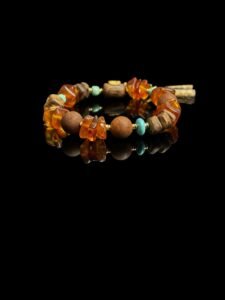
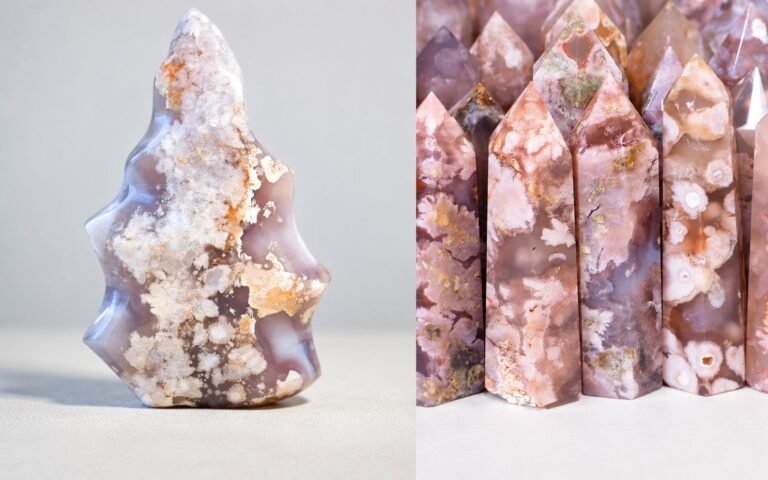
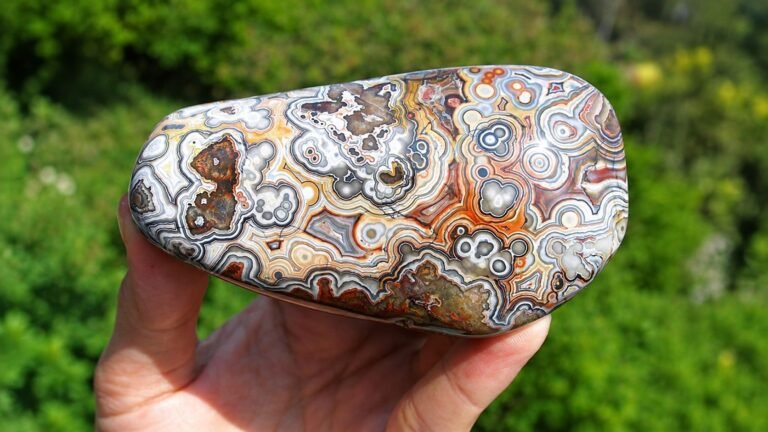
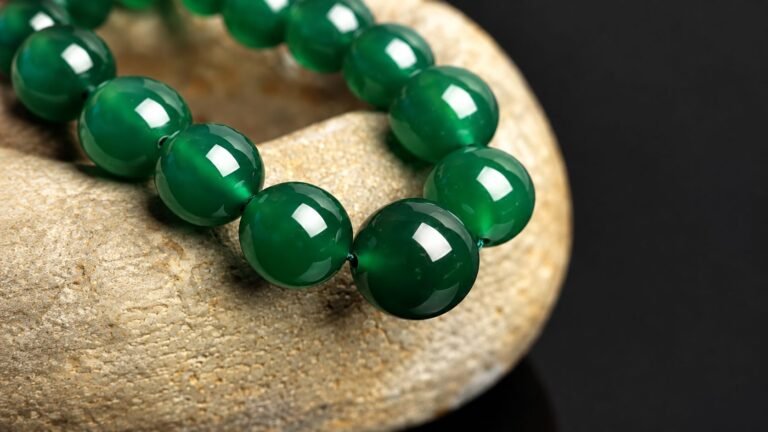
Yun Agate uses Pangu as contemporary Chinese mythology-inspired design inspiration. Earth-toned, golden, layered or naturally varied materials may evoke the movement from primordial chaos toward a formed world when those qualities appear in a piece. The collection includes multiple gemstone and natural-material designs.
Yun Agate designs, handcrafts and assembles jewelry in Fuxin, China. The connection between Pangu and the jewelry is a modern creative translation of the myth, not an ancient gemstone association. Explore the Pangu-inspired jewelry or visit the Chinese mythology stories behind Yun Agate to see how the seven design narratives connect.
Frequently Asked Questions
Who is Pangu in Chinese mythology?
Pangu is a primordial or cosmogonic figure associated with the separation of heaven and earth. English retellings variously call him a god, giant or primordial being.
What is the Pangu creation myth?
It is a story in which an undivided cosmos separates into heaven and earth while Pangu grows between them. A related tradition says his body became parts of the world.
How did Pangu separate heaven and earth?
Pure yang rises as heaven, turbid yin becomes earth, and Pangu remains between them. The verified early passage does not mention an axe.
Was Pangu born from a cosmic egg?
An early account compares primordial chaos to an egg and places Pangu within it. Detailed hard-shell and hatching scenes are features of later popular retellings.
Did Pangu use an axe?
The axe is common in modern images and adaptations, but it was not found in the early Sanwu Liji passage used for this article.
What happened when Pangu died?
In a related textual tradition, parts of Pangu’s body transform into natural features such as wind, thunder, the sun, moon, mountains and rivers. Exact lists differ by source.
Did Pangu create humans, or was that Nüwa?
Pangu mainly shapes the cosmos, while Nüwa creates humans in other traditions. One Pangu version connects insects on his body with humanity, showing that Chinese creation mythology has several overlapping accounts.