Address
Designed & handcrafted in Fuxin, China
Natural agate jewelry made by hand. Worldwide shipping available.
Work Hours
Monday to Friday: 7AM - 7PM
Weekend: 10AM - 5PM
SEP 25,2026
Blue Agate is a broad market term for blue or blue-gray agate used in jewelry, beads and decorative objects. Agate is a variety of chalcedony, a fine-grained form of quartz. Naturally blue material exists, but commercial Blue Agate may also be dyed or color-enhanced.
Because the name covers varied appearances and treatment histories, buyers should consider the underlying material, the origin of its color and the seller’s disclosure separately.
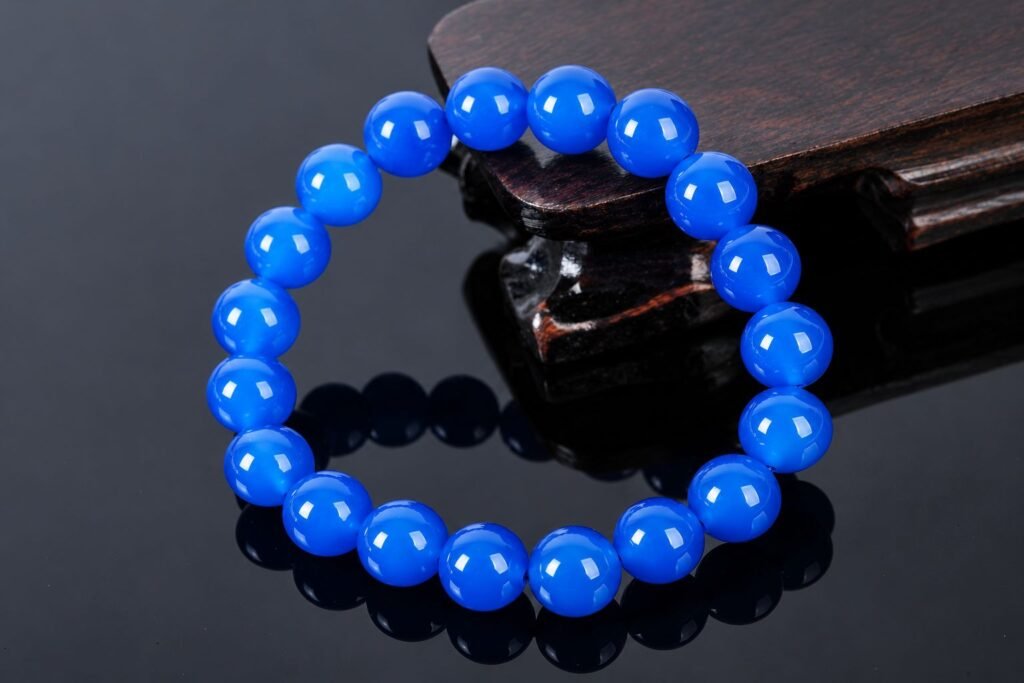
Blue Agate is agate or agatic chalcedony sold for its blue coloration. It may appear pale blue, gray-blue, lavender-blue, cloudy, translucent, banded or patterned. Some pieces show clear layers, while others have softer color transitions or little visible banding.
“Blue Agate” is better understood as a broad color and market category than as one rigid, standardized mineral species. Individual pieces can differ in structure, saturation, translucency and treatment status. For broader background, see Yun Agate’s guide to agate types, colors and formation.
Blue Agate and Blue Chalcedony are related materials. Chalcedony is the broader term for fine-grained quartz, while agate generally refers to chalcedony with banding, layers or other characteristic patterning.
Commercial labels are not always used consistently. Relatively uniform blue material may be sold as Blue Chalcedony, while patterned or banded material may be labeled Blue Agate. Product descriptions should identify the material as specifically as the available evidence supports.
Yes. Naturally blue and blue-gray chalcedony or agatic material can occur. Natural examples may look pale, grayish, lavender-toned, cloudy or unevenly colored.
Dyed Blue Agate is also common in commercial markets. Dye can create or intensify blue color, including bright and highly saturated shades. However, vivid color alone does not prove treatment, and pale color does not guarantee that a stone is untreated.
There is no universal visual rule—or reliable market-wide percentage—that establishes how much Blue Agate is dyed.
The clearest way to evaluate Blue Agate is to separate four questions:
Genuine agate can be dyed. A treated stone is therefore not automatically fake or an imitation; material identity and color origin are separate issues. Treatment may alter, intensify or standardize color, and treated material can still be attractive and suitable for jewelry.
The important concern is transparency. A seller should not describe dyed material as naturally blue or untreated when that claim cannot be supported. Clear disclosure lets buyers compare appearance, price and personal preferences accurately.
No photograph can conclusively establish that Blue Agate is untreated. Possible inspection clues include unusually intense or uniform saturation, color collecting in fractures or porous layers, concentration around drill holes, and color distribution that appears inconsistent with the stone’s structure.
These are clues, not universal proof. Natural and treated specimens both vary, while lighting and editing can alter color. Avoid destructive tests involving scratching, acids, heat or harsh chemicals. Yun Agate’s guide to how to tell if agate is real explains safer evaluation principles.
Clear seller disclosure is usually the practical starting point. If untreated color materially affects the value of an expensive purchase, professional gemological evaluation may be appropriate.
Blue Agate is a broad category for blue-colored agate or agatic chalcedony. Depending on the piece, it may be naturally blue-gray, color-enhanced or dyed. Its appearance can range from nearly uniform to cloudy, layered or strongly banded.
Blue Lace Agate is a more specific variety, typically recognized by pale blue color combined with white or light lace-like banding. Its name describes a more consistent visual identity than the general Blue Agate label.
The terms should not be used interchangeably for every blue stone. Blue Lace Agate belongs within the wider agate family, but not all Blue Agate is Blue Lace Agate. Buyers seeking the lace variety should look for its characteristic pattern and a specific material description rather than assuming any pale-blue bead qualifies.
Start with the seller’s description rather than color alone. Check for:
Banding can support an agate identification when present, but not every piece displays obvious bands. Natural-looking variation also does not prove untreated color. Be cautious when a seller claims certainty from appearance alone or avoids direct treatment questions.
Blue Agate has no single universal meaning. A wearer may associate its color and pattern with calm, clarity, communication, distance, water or reflection. Meaning can also come from a gift, memory, personal milestone or the appearance of one particular stone.
Crystal and spiritual practices sometimes connect Blue Agate with protection, anxiety relief, emotional balance, communication or the throat chakra. These are modern spiritual interpretations or personal beliefs, not demonstrated physical or psychological effects.
A bracelet or pendant can hold personal significance without requiring a claim that the stone produces a measurable outcome.
Blue Agate is used for beads, bracelets, necklaces, earrings, pendants, cabochons, carvings and decorative objects. Pale or translucent material can create a quiet, cool-toned effect, while stronger saturation or visible bands can become the main visual feature.
Designers may combine blue beads with neutral stone, metal, wood or clear materials. Because pattern and treatment can affect appearance, buyers should judge each finished piece by its actual photographs and description rather than expecting every Blue Agate item to look alike.
Clean Blue Agate with lukewarm water, mild soap and a soft cloth or soft brush. Rinse gently and dry it thoroughly. Avoid harsh chemicals, extreme heat, hard impacts and repeated contact with harder jewelry.
Use additional caution with known dyed or treated material, and avoid harsh chemicals or excessive heat that could affect its appearance. Store pieces separately when practical. For more detail, follow Yun Agate’s agate jewelry care guidance.
Blue Agate is a broad market term for blue or blue-gray agate and agatic chalcedony. Its color may be natural, treated or dyed, depending on the individual piece.
Yes. Naturally blue and blue-gray material exists. Commercial Blue Agate may also be dyed or color-enhanced, so treatment disclosure matters.
Dyed Blue Agate is common in commercial markets, but naturally blue and blue-gray material also exists. There is no reliable market-wide percentage showing that most Blue Agate is dyed.
It can be. Genuine agate may be dyed, so treatment does not automatically make the underlying material fake. The treatment and color origin should be disclosed accurately.
Blue Agate is a broad blue-colored category. Blue Lace Agate is a more specific variety typically recognized by pale blue color and white or light lace-like banding.
They are closely related. Chalcedony is the broader fine-grained quartz material, while agate generally describes patterned or banded chalcedony. Commercial labels may overlap.
Check the material description, treatment disclosure, actual-item photographs, pattern, finish and seller transparency. A photograph or single visual clue cannot conclusively prove authenticity or untreated color.
It may personally symbolize calm, clarity, communication, water or reflection. Spiritual claims associated with it are beliefs or modern interpretations, not scientifically demonstrated effects.
FEATURED PRODUCTS