Address
Designed & handcrafted in Fuxin, China
Natural agate jewelry made by hand. Worldwide shipping available.
Work Hours
Monday to Friday: 7AM - 7PM
Weekend: 10AM - 5PM
OCT 3,2026
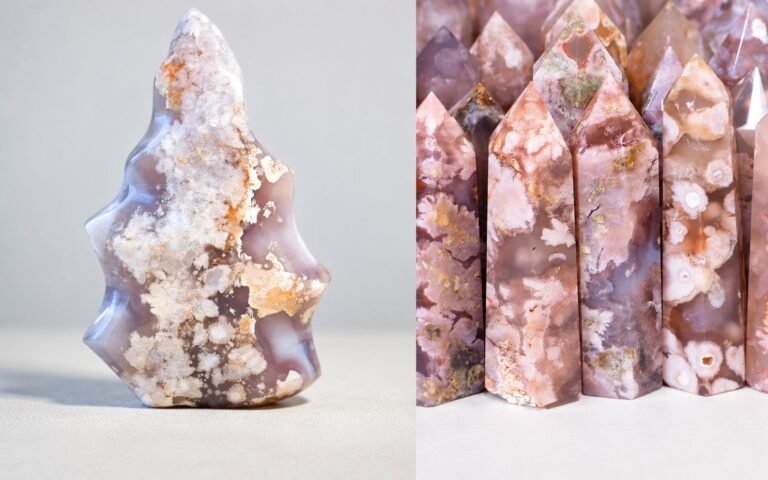
Purple agate is a descriptive market term for purple-colored agate or chalcedony, not one strictly standardized mineral species. Naturally purple microcrystalline quartz and chalcedony do exist, but commercial material may also be dyed or otherwise treated. Purple agate also differs from amethyst, which is macrocrystalline purple quartz.

Agate is a form of chalcedony, a fine intergrowth of quartz crystals too small to distinguish without magnification. Many agates show bands, layers, clouds, or zones created as silica-rich material filled cavities and fractures over time. For a broader explanation, see what agate is and how it forms.
In the jewelry market, purple agate usually means agate or chalcedony with a purple appearance. The name may describe color and pattern rather than a single mineral species, geographic source, or treatment status. One piece may be softly lavender and translucent; another may have dark purple bands, cloudy zones, or an opaque body color.
Those visual traits can help you describe a specimen, but color alone cannot establish what the material is or whether its color is natural. A reliable identification considers internal structure, surface features, seller disclosure, and, when value justifies it, gemological testing.
Naturally purple chalcedony exists. At the same time, agate is commonly dyed in commercial jewelry and decorative objects. The label purple agate therefore does not answer four separate questions: Is the base material genuine agate or chalcedony? Is the purple color natural? Has the stone received a treatment? Is the object an imitation made from another material?
A seller can accurately call a dyed piece genuine agate if the underlying material is agate, but that does not make the color natural. Conversely, a naturally purple piece still needs enough evidence to support a natural-color claim. There is no dependable market-wide percentage for how much purple agate is dyed, so each item should be evaluated on its own disclosure and evidence.
Natural purple in microcrystalline quartz can reflect a specimen-specific combination of trace elements, color centers, inclusions, and geological conditions. Some material may be described as amethystine chalcedony. No single cause should be assigned to every product sold as purple agate, and neither iron nor manganese is a universal explanation. Laboratory analysis may be needed when color origin materially affects value.
Chalcedony can contain microscopic pores and fractures that accept colorants. Dye may penetrate unevenly and sometimes collect around cracks, cavities, or drill holes. The result can still be genuine agate, yet treatment disclosure matters because buyers may value natural color differently, and some dyes require more cautious care. For U.S. buyers, FTC guidance says relevant gemstone treatments should be disclosed, especially when a treatment is not permanent, requires special care, or significantly affects value.
Clear product language should separate material identity from color origin. Yun Agate’s guide to natural and dyed color in Blue Agate and its discussion of White Agate and treatment disclosure provide useful context for the same distinction.
Start with the stone’s internal structure. Natural-looking bands, layers, cloudy zones, and variations in translucency can be consistent with agate or chalcedony, although they do not prove natural color. Examine several real-product photos under neutral light and ask whether the listing shows the exact item or only a representative sample.
Compare the listing’s title, specifications, photos, and seller answers. If one part says natural purple agate while another says dyed chalcedony, ask for clarification before buying. Lighting and screen settings can also shift purple toward blue, red, or gray, so a photo’s hue is not reliable evidence of color origin. Measurements, close-ups, and a written treatment statement are more useful than heavily edited lifestyle images.
Color that appears much stronger in cracks, pores, cavities, or around drill holes can be a reason to ask about dye. Extremely uniform or unusually saturated color may also justify questions. These are clues only. Natural stones can have strong or uneven color, while skilled treatment may leave little visible evidence.
For possible imitations, look for round gas bubbles, molding seams, a surface coating, or repeated patterns that look manufactured. None of these checks should replace documentation or professional testing for a valuable purchase. A qualified gemologist or laboratory can offer stronger evidence than photos alone.
Do not use acetone, flame, boiling water, acid, or destructive scratch tests. They can damage the stone, its finish, the dye, or the jewelry setting without producing a reliable answer. Use Yun Agate’s guide to telling if agate is real for a broader non-destructive inspection process.
Purple agate and amethyst are both quartz materials, but their structures differ. Purple agate or chalcedony is a microcrystalline aggregate made of extremely small intergrown crystals. Amethyst is macrocrystalline purple quartz, meaning it grows as larger crystals that can form recognizable points or crystal faces.
Feature | Purple Agate or Chalcedony | Amethyst |
Material and structure | Microcrystalline quartz aggregate | Macrocrystalline purple quartz |
Typical appearance | Banded, layered, cloudy, or patterned | Glassy crystal material that may show color zoning |
Banding | Common in agate, but not present in every piece | Not typical agate banding |
Crystal form | Individual crystals are usually too small to see | May form visible crystal points or faces |
Transparency | Often translucent to opaque | Commonly transparent to translucent |
Commercial naming | Broad color or trade label | Recognized purple variety of quartz |
Treatment concerns | Dyeing is common in agate generally; item disclosure matters | Heat, irradiation, and synthetic material are separate concerns |
Can photos prove identity? | No | No |
A geode can contain both categories: a banded agate or chalcedony wall may surround quartz or amethyst crystals. That combination is normal and explains why marketplace labels sometimes blur the terms. Hardness is not a useful home distinction because both materials are quartz-based, and scratch testing can damage jewelry without settling the identification.
When comparing other color-based agate names, Yun Agate’s Yellow Agate guide and Black Agate material guide show why color descriptions still need material and treatment context.
There is no single globally standardized ancient meaning for purple agate. In modern jewelry and crystal traditions, people may associate purple stones with calm, intuition, creativity, reflection, or renewal. These associations are symbolic choices, not properties established by mineral science.
Meaning can still be personally useful when it is presented honestly. A wearer might choose a purple stone as a reminder to pause, think clearly, or begin again. If Yun Agate connects a design with Nüwa, that connection should be described as Yun Agate’s modern creative interpretation, not as evidence of an ancient purple agate tradition.
Some people use gemstones as symbolic objects, meditation aids, or personal reminders. Claims about healing, chakras, energy, or protection belong to modern spiritual belief systems. They are not scientifically demonstrated medical effects, and purple agate should not be presented as a treatment for anxiety, insomnia, pain, digestive problems, reproductive conditions, immunity, or any other health concern.
A geode is a rock cavity lined with mineral material. Its outer wall may include layers of agate or chalcedony, while the open center may hold quartz crystals, including amethyst. A single specimen can therefore have a chalcedony wall and visible purple quartz crystals inside.
Marketplace titles use purple agate geode loosely. The label might refer to a naturally purple chalcedony layer, a dyed agate shell, an amethyst-lined cavity, or a combination. Before buying, ask which part is agate, which part is crystal, whether the purple color is natural or treated, and whether the photos show the exact specimen.
Begin with the product description. It should name the material accurately and disclose known dyeing, coating, stabilization, or other treatment. Look for separate language about the base material and the origin of its color. A natural-color claim on an expensive item deserves stronger support than a general trade label.
Review real-item photos when natural pattern and color matter. Check banding, translucency, drill holes, polish quality, chips, and the consistency of the color from several angles. Confirm dimensions rather than judging scale from a styled image. For bracelets and necklaces, also review the cord or elastic, metal findings, clasp, and any mixed gemstones, because those components affect durability and care.
Ask what documentation supports a valuable natural-color claim and whether that document identifies the exact item. Read the return policy before purchase, especially when photos are representative. Seller answers should be clear and consistent across the title, description, specifications, images, and invoice.
Trade names often describe appearance rather than strict mineral identity; the Moss Agate guide offers another example of why pattern and material should be read together. If you want a purple design rather than a specific mineral, you can explore Yun Agate’s purple gemstone designs. Check each product’s actual label because amethyst and lepidolite are not purple agate.
Clean purple agate with lukewarm water, mild soap, and a soft cloth or soft brush. Rinse gently and dry the piece thoroughly. Avoid hard impacts, extreme heat, strong acids or alkalis, and unknown solvents. If treatment status is unknown, avoid alcohol, acetone, and prolonged intense light because some dyes may be affected.
Care for the whole piece, not only the stone. Elastic, cord, plating, metal findings, adhesives, and mixed gemstones may require gentler handling than the agate itself. Store jewelry separately to reduce scratching and follow the most cautious care requirement among its components.
Is Purple Agate a real stone?
Yes, the term can describe genuine purple-colored agate or chalcedony. It is a broad market label, so the name alone does not establish exact identity, color origin, or treatment.
Is Purple Agate naturally purple?
Some chalcedony is naturally purple. Other material sold as purple agate is dyed or treated. Reliable claims should be tied to the individual item and its supporting disclosure.
Is all Purple Agate dyed?
No. Naturally purple chalcedony exists, but dyeing is common in agate generally. Neither natural color nor treatment can be assumed from the trade name.
How is Purple Agate different from Amethyst?
Purple agate is microcrystalline quartz or chalcedony and may show bands or layers. Amethyst is macrocrystalline purple quartz and may form visible crystal points or faces.
Can a Purple Agate geode contain Amethyst?
Yes. A geode may have an agate or chalcedony wall with amethyst crystals inside. Ask the seller to identify each part and disclose any treatment.
How can you tell if Purple Agate has been dyed?
Color concentrated in cracks, pores, cavities, or drill holes can be a clue, as can unusually uniform saturation. Visual clues are not proof; seller disclosure or gemological testing is stronger evidence.
What does Purple Agate symbolize?
Modern traditions may connect purple stones with calm, intuition, creativity, reflection, or renewal. These are symbolic associations rather than scientifically proven effects or one universal ancient meaning.
FEATURED PRODUCTS