Can You Wear a Beaded Bracelet With a Watch?
Yes. The result depends less on a strict fashion rule than on proportion and placement. If you are still deciding which stone, color, or diameter suits you, begin with our guide to choosing a gemstone bracelet for men. Then use the watch as a visual anchor.
Same Wrist or Opposite Wrist?
Both arrangements can work. Your choice affects the visual balance, comfort, and likelihood of the pieces touching.
Wearing the Bracelet on the Same Wrist
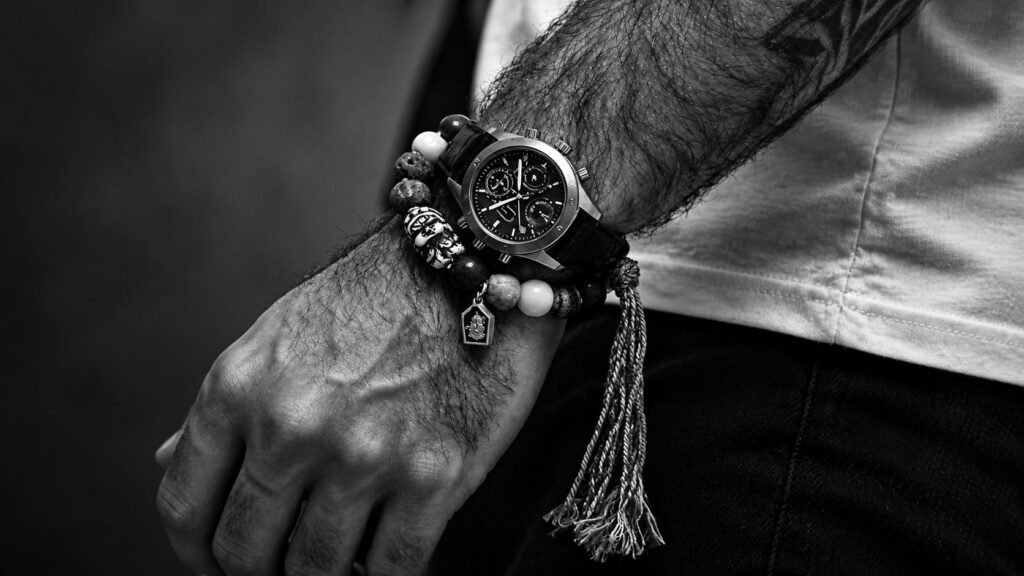
Placing a bracelet beside the watch creates one focal point. It works well when the bracelet shares the available space comfortably and its colors relate to the dial, case, or strap. Test it while moving your hand. If the bracelet repeatedly hits the case or pushes the watch out of position, try smaller beads, a more stable fit, or the other wrist.
Wearing the Bracelet on the Opposite Wrist
Wearing the pieces separately gives each one more space and can reduce repeated contact. It is practical for larger beads, polished cases, or statement watches. The two sides need not be symmetrical; shared color or material can still create balance.
Should the Bracelet Sit Above or Below the Watch?
On the same wrist, a bracelet can sit toward the elbow or toward the hand. Above the watch often keeps the watch in its familiar position; below it may make the bracelet more visible but allow more movement. Try both. Choose the position that stays comfortable and does not constantly strike the watch.
Match Bead Size to the Watch
Bead diameter changes how much space and visual weight a bracelet adds:
- 5–6 mm beads create a subtle line and are easy to pair with slim or understated watches.
- 8–10 mm beads have a noticeable but versatile everyday presence beside many watch styles.
- 12 mm and larger beads make a stronger statement and need more wrist space.
These are visual examples, not gender rules. A large watch does not require large beads, and a slim watch can work with a bold bracelet when the contrast is intentional. Wrist size and fit also matter. For accurate sizing, measure your wrist for a bracelet.
Coordinate Color and Material
Coordination does not require an exact match. A shared tone, finish, or level of contrast is often enough to make the pieces feel connected.
Black and Neutral Stones
Black and gray beads pair easily with steel cases, black dials, and monochrome straps. Their restrained palette stays clean even with natural variation. Our Black Agate guide explains the material further.
Green and Earth Tones
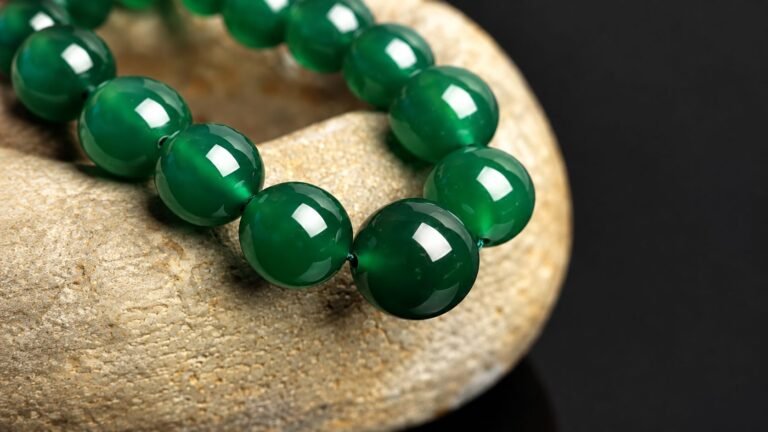
Green, brown, and moss-like patterns suit leather straps, warm metals, denim, and earth tones. Natural variation adds texture without requiring an exact match. See the Moss Agate guide for more about its appearance.
Red and Mixed-Material Accents
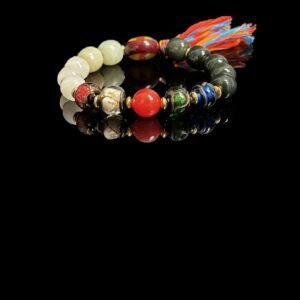
Red beads create a stronger accent, while stone, wood, metal, or Dzi combinations add texture. A simpler watch can give a complex bracelet more room. If both pieces are bold, leave enough space for each to remain distinct.
How Many Bracelets Should You Wear With a Watch?
One bracelet is the simplest starting point. Two or three can work when their colors, textures, or diameters relate and the group remains comfortable. There is no universal maximum. Stop when the stack restricts movement, overwhelms the watch, or causes frequent collisions.
How to Reduce Contact With the Watch
Repeated contact between hard gemstone beads and polished watch surfaces can cause visible marks over time. No arrangement guarantees complete protection, but spacing, a stable fit, or opposite-wrist wear can reduce risk. Avoid forcing a tight stack against the case, and remove the bracelet for high-impact activity. For cleaning and storage guidance, see how to care for agate and gemstone jewelry.
Adjust the Combination for the Occasion
Everyday and Casual Wear
Casual outfits allow the most freedom. Natural patterns, mixed materials, and stronger contrast can work with sport, field, or everyday watches.
Work and Smart-Casual Wear
For a quieter combination, try one moderate-size bracelet in black, gray, deep green, or brown.
Formal Settings
A bracelet is optional. If worn, a slimmer design that sits comfortably under or beside a shirt cuff is usually easier to integrate into formal clothing.The dress code matters more than any fixed rule.
Which Wrist Should You Use?
Choose the wrist that feels natural. Many people keep a watch on the non-dominant hand, but your bracelet can sit beside it or on the other wrist. Consider typing, writing, desk contact, watch placement, and comfort. There is no universal left- or right-wrist requirement.
If you want to compare different colors and bead proportions, browse Yun Agate’s handmade agate and gemstone bracelets as visual examples rather than a prescribed formula.
Frequently Asked Questions
Can you wear a beaded bracelet on the same wrist as a watch?
Yes. Leave enough space for comfortable movement and check that the beads do not repeatedly strike the watch case or crystal.
Should a bracelet sit above or below a watch?
Either position can work. Try the bracelet toward the elbow and toward the hand, then choose the arrangement that moves less and feels more comfortable.
Can gemstone beads scratch a watch?
Repeated contact can mark some watch surfaces. Separation, a stable fit, and opposite-wrist wear can reduce contact, but no placement guarantees complete protection.
What bead size looks best with a watch?
It depends on the watch, wrist, and desired effect. Beads around 5–6 mm look subtle, 8–10 mm are versatile, and 12 mm or larger create a bolder presence.
How many bracelets can you wear with a watch?
Start with one. Add more only if the stack remains comfortable, visually clear, and does not create constant contact with the watch.
Should a bracelet go on the left or right wrist?
There is no universal rule. Choose according to your dominant hand, existing watch placement, daily activities, and personal comfort.