What Is Nanhong Agate?
Nanhong is a Chinese trade and cultural name within the broader agate family, not a separate mineral species. Like other agates, it is a fine-grained form of quartz. Its best-known feature is its red color, which is generally connected with tiny iron-bearing particles within the stone.
The name literally means “southern red,” so English sources may also use “South Red Agate” or “Southern Red Agate.” The term Nanhong red agate combines the recognized trade name with the familiar gemstone category. For a wider introduction to the material family, see Yun Agate’s general guide to agate.
Where Does Nanhong Agate Come From?
Baoshan in Yunnan Province is the historic locality most closely linked with Nanhong. Baoshan Nanhong agate is often known for rich red color and natural internal features. Liangshan in Sichuan Province is another important modern source, producing material in a wide range of reds, patterns, and red-and-white combinations.
A locality name is a sourcing claim, not something that color alone can prove. For an everyday purchase, clear seller disclosure is usually the most useful starting point; independent testing is more relevant for unusually valuable pieces, especially for material identity and treatment.
Origin also does not determine quality by itself. Color balance, usable material, cutting, polish, and the maker’s skill all influence the finished piece. A thoughtfully made Liangshan bead can be more appealing than a poorly finished stone carrying a more prestigious locality name.
What Does Nanhong Agate Look Like?
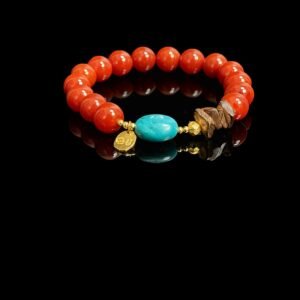
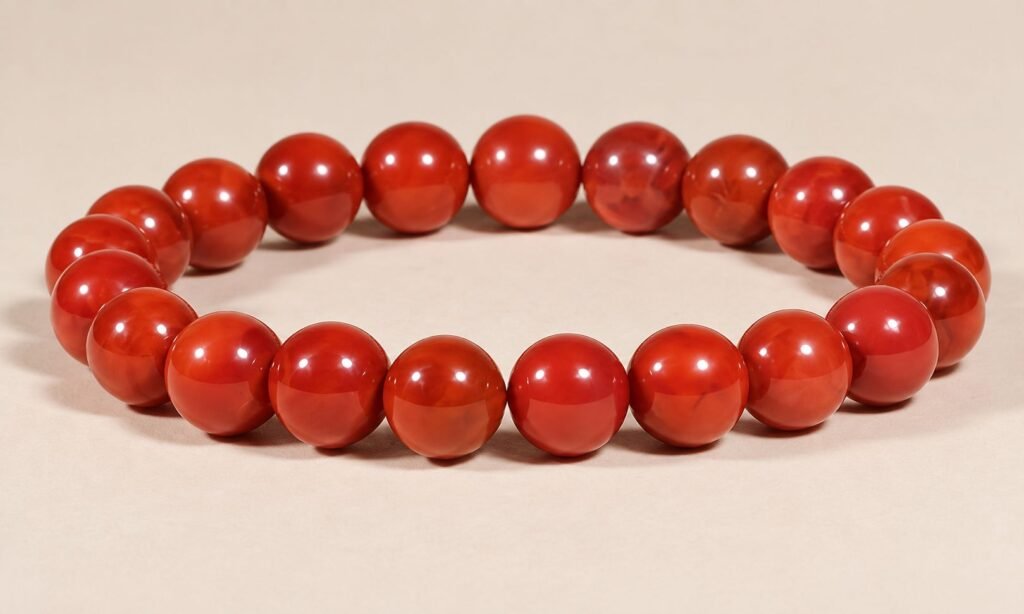
Nanhong can appear orange-red, vermilion, deep crimson, or softly translucent red. Some pieces are nearly uniform, while others contain white areas, fine speckles, cloudy sections, bands, or flowing patterns. These differences are part of the stone’s natural character and can be especially attractive in beads and carvings.
Its red coloration is mainly associated with microscopic iron compounds. Trade descriptions such as “persimmon red” or “rose red” can help describe appearance, but they are not universal grading standards. Compare the actual photographs and disclosure rather than relying on a poetic color name.
When shopping online, view the stone against a neutral background and in ordinary daylight if those images are available. Highly warm lighting can deepen red tones, while heavy editing may hide texture. Small shifts in color from bead to bead can be natural and often make a handmade piece feel more individual.
Nanhong Agate vs. Red Agate
Red agate is a broad description that can refer to agate from many regions and with different color or treatment histories. Nanhong agate is narrower: the name carries a Chinese origin and trade context as well as an expected red-agate appearance.
In simple terms, Nanhong belongs within the wider red-agate category, but not every red agate should be sold as Nanhong. If the Nanhong name affects the price, the seller should explain the material, claimed source, and known treatment status.
Nanhong Agate vs. Carnelian
Carnelian is another red-to-orange variety of fine-grained quartz, so the two can look similar. Carnelian is commonly more uniformly orange, red-orange, or brownish red. Nanhong is often associated with richer reds, white structure, spotting, or more varied internal patterns.
These are practical visual clues rather than conclusive tests. Lighting, photography, natural variation, and treatments can change how either stone appears, so a photograph alone cannot always separate Nanhong agate from carnelian.
How to Choose Natural Nanhong Agate
A useful listing should tell you what the material is, whether the color is natural or treated, and how confidently the source is known. Then evaluate the piece as jewelry, not only as a gemstone name.
- Check the disclosure. Look for clear material, origin, and treatment information in plain English.
- Use neutral-light photos. Review several angles, including drill holes, white areas, and visible fractures.
- Inspect workmanship. Look at polish, bead matching, smooth drill holes, cord or elastic quality, and clasp security.
- Confirm bracelet details. Check wrist size, inner circumference, bead diameter, weight, and whether the bracelet stretches.
- Reserve testing for major purchases. A recognized gemological report is most useful when the price is significant or material and treatment disclosure needs verification.
For a Nanhong agate bracelet, comfort matters as much as color. Larger beads create a stronger visual presence but add weight; smaller beads usually layer more easily. Make sure the stated measurement describes the wearable inner circumference rather than only the unstretched strand length.
Natural variation is not automatically a flaw, and perfect uniformity is not automatically a sign of quality. Judge the complete object: accurate description, condition, craftsmanship, design, and seller accountability. You can apply these checks when viewing Yun Agate’s red agate bracelet selection.
Nanhong Agate Meaning and Cultural Symbolism
In Chinese culture, red is widely associated with celebration, vitality, courage, and auspicious occasions. Because of its color and Chinese heritage, Nanhong agate is often chosen to express perseverance, confidence, good fortune, or symbolic protection.
Yun Agate connects red agate with the story of Xingtian, a mythological figure remembered for determination after defeat. This is a design story and cultural interpretation, not a gemological property. Claims about Nanhong agate meaning or benefits should be understood as traditional or personal beliefs, not medically proven effects.
How to Care for Nanhong Agate
Wipe Nanhong jewelry with a soft cloth. When needed, use lukewarm water, mild soap, and a soft brush, then rinse briefly and dry completely. Avoid bleach, solvents, perfume, steam, and ultrasonic cleaning, especially when treatment history is unknown.
Remove bracelets before swimming, exercise, or work that may strike the beads, and store them away from harder stones and metal edges. See Yun Agate’s jewelry care guide for more practical advice, or visit the Yun Agate blog for more gemstone and design stories.
Frequently Asked Questions
What is Nanhong agate?
Nanhong agate is a Chinese trade and cultural name for distinctive red agate associated mainly with southwestern China. It belongs to the broader fine-grained quartz family.
Is Nanhong the same as red agate?
Nanhong is part of the wider red-agate category, but the Nanhong name adds a Chinese sourcing and trade context. Not every red agate is Nanhong.
What is the difference between Nanhong agate and carnelian?
Carnelian is often more uniformly orange to brownish red, while Nanhong may show richer red, white areas, or varied patterns. Appearance alone is not always conclusive.
Where does Nanhong agate come from?
Baoshan in Yunnan and Liangshan in Sichuan are the best-known sources. A precise locality needs supporting records; gemological testing may identify material or treatments but may not prove origin.




-300x300.jpg)