Address
Designed & handcrafted in Fuxin, China
Natural agate jewelry made by hand. Worldwide shipping available.
Work Hours
Monday to Friday: 7AM - 7PM
Weekend: 10AM - 5PM
SEP 24,2026
White Agate is a market term for pale white, cream, gray-white or milky agate. Some pieces are naturally pale; others may be selected, bleached, heated or dyed for a more uniform appearance. This distinction matters: Some White Agate on the market is naturally pale, while other material may be treated to alter or standardize its appearance. This guide covers appearance, treatments, identification limits, symbolism, jewelry uses and practical buying checks.
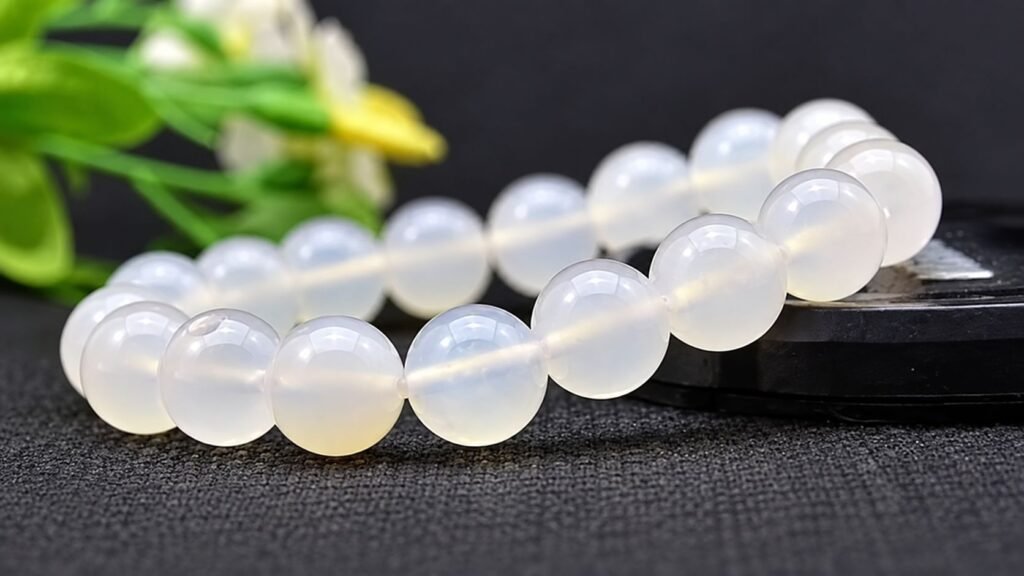
White Agate is pale-colored agate, a variety of chalcedony made from microscopic quartz crystals. “White Agate” describes appearance in the gemstone and jewelry market; it is not one rigid geological species with a single required look.
White Agate may appear white, ivory, cream, pale gray or milky. It can be opaque, softly translucent or cloudy. Some specimens show delicate bands; others have subtler patterns, inclusions or tonal variation.
Matching a piece to an idealized product photo is not enough for identification. Yun Agate’s guide to agate types, colors and formation provides broader material context.
Agate commonly forms when silica-rich fluids deposit chalcedony within cavities or fractures over time. Differences in structure, translucency and included minerals affect how light passes through it.
Clouding, fine internal structure, inclusions and occasional banding can create a white or milky appearance. No single mechanism explains every piece sold as White Agate; natural variation and treatment may both influence the result.
Yes, naturally white and pale agate exists. However, the commercial term may also be used for genuine agate that has been bleached, heated, dyed or selected for unusually consistent color.
Treatment does not automatically turn genuine agate into an imitation. Material identity and color origin are separate questions. Clear disclosure should distinguish naturally pale agate, treated genuine agate and other stones sold under an inaccurate name.
Naturally pale agate often varies between areas or beads, but variation cannot prove that a piece is untreated. Uniform color does not prove treatment either. Lighting and image editing can also change how jewelry appears online.
Look for specific descriptions such as “natural color,” “bleached” or “dyed,” rather than relying on “natural” alone. If treatment status matters, ask the seller; photographs cannot always resolve it.
Start with the seller’s labeling. Check whether the listing names the material precisely, discloses relevant treatments and shows clear photographs from several angles.
Genuine White Agate may vary in tone, clouding, translucency, inclusions or pattern. On beads, examine the polish and drilled holes. Color concentrated in cracks or openings may justify questions, but is not definitive proof of dye. Avoid destructive tests involving scratching, acids, chemicals or heat.
For a fuller buyer checklist, see how to tell if agate is real.
White Agate may show chalcedony-like translucency, clouding or fine bands. White quartz can look more crystalline or glassy. Moonstone is a feldspar known for a floating sheen, while howlite is typically opaque white with gray or dark veining.
These are tendencies, not conclusive tests. Small polished beads can overlap in appearance, so reliable identification may require documentation or professional gemological testing.
White Agate has no universal meaning. Its pale color may suggest simplicity, calm, clarity, remembrance, ceremony or quietness. Meaning can also come from the giver, occasion or design story.
Modern crystal practices sometimes connect it with grounding, protection, energy or chakras. These are spiritual interpretations, not demonstrated effects. Jewelry can hold personal significance without medical or supernatural claims.
White Agate is used for beads, bracelets, necklaces, cabochons, carvings, ornaments and decorative stone. Its neutral palette pairs easily with dark agate, warm stones, wood or metal.
Translucent pieces create a light, layered appearance, while opaque beads offer stronger contrast. Designers may choose either visual consistency or deliberate natural variation.
Start with an honest material description. Sellers should distinguish White Agate from similar stones, disclose known treatments and explain whether photographs show the actual piece or representative variation.
Inspect the polish, bead surfaces, drilled holes, cord or findings, bead diameter and wrist-sizing information. Review resizing and return terms. Be cautious when a listing substitutes guaranteed healing or protection claims for verifiable material details.
Clean White Agate with lukewarm water, mild soap and a soft cloth or brush. Rinse and dry it thoroughly. Avoid harsh chemicals, extreme heat and hard impacts, and store it away from harder jewelry.
Cord, elastic, findings and additional gemstones may need different care. Yun Agate’s agate jewelry care guide provides fuller instructions.
Yun Agate uses white and translucent tones in its Chang’e-inspired White Agate jewelry to evoke moonlight, distance, pale light and quiet visual contrast. These choices reflect the atmosphere of Chang’e’s lunar story through modern color and material composition. They are Yun Agate’s contemporary creative interpretation, not evidence of an ancient tradition linking Chang’e with White Agate. The mythology does not establish that Chang’e wore the stone, that it was sacred to her or that ancient Chinese traditions assigned White Agate to the moon goddess.
White Agate is a market term for pale white, cream, gray-white or milky agate. It is chalcedony composed of microscopic quartz crystals and may be opaque, translucent, cloudy or subtly banded.
Yes. Naturally pale and white agate exists, but some commercial material may also be bleached, heated, dyed or selected for uniform appearance.
Yes. Genuine agate can be treated to alter or standardize its appearance. Treatment does not automatically make the material fake, but it should be disclosed when relevant.
Check accurate labeling, treatment disclosure, natural variation, finish and drilled holes. Photographs and visual clues can raise useful questions, but they may not conclusively identify every polished specimen.
There is no universal meaning. People may associate it with simplicity, calm, clarity, remembrance or a personal event. Spiritual interpretations should be understood as beliefs rather than proven effects.
No. Agate is microcrystalline chalcedony; common white quartz is generally macrocrystalline quartz, while moonstone is feldspar. Similar-looking polished pieces may require expert identification.
Use lukewarm water, mild soap and a soft cloth or brush. Avoid harsh chemicals, extreme heat and impacts, then dry the jewelry fully before storing it.
FEATURED PRODUCTS