Address
304 North Cardinal
St. Dorchester Center, MA 02124
Work Hours
Monday to Friday: 7AM - 7PM
Weekend: 10AM - 5PM
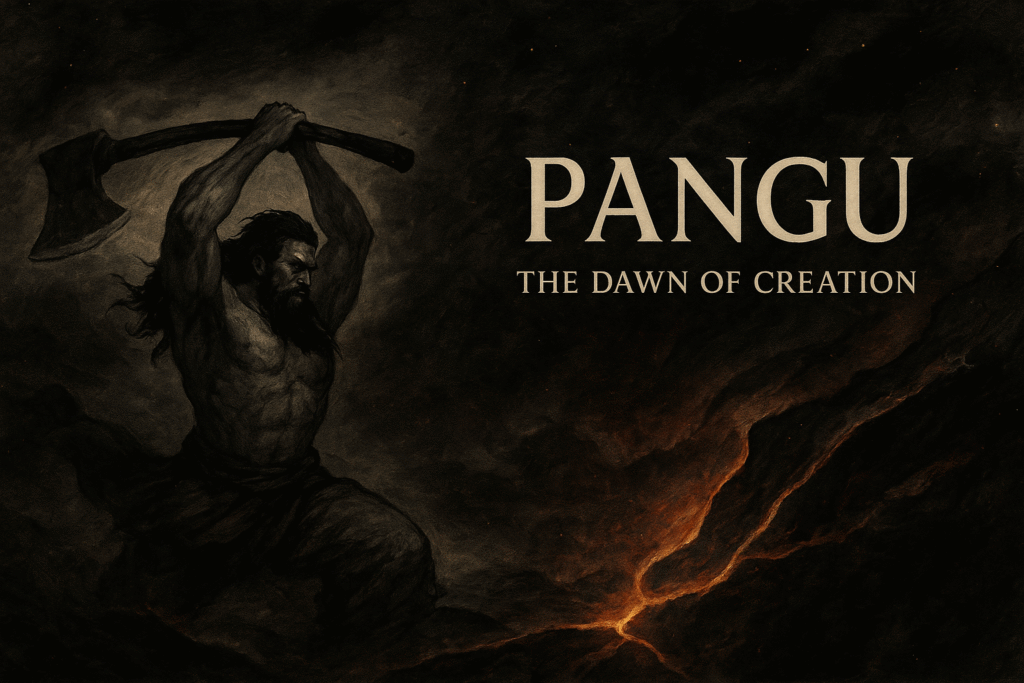
In the beginning, before time had a name, the universe was a silent chaos — a boundless cosmic egg with no sky above and no earth below. From this primordial void awakened Pangu, the first giant. As he grew, his strength shook the darkness around him, until at last he raised a colossal axe and struck. With a thunderous blow, he split the chaos: the light and pure soared upward to form the heavens, while the heavy and dark sank to become the earth. To keep them apart, Pangu stood between heaven and earth, pushing the sky higher and anchoring the land deeper for eighteen thousand years, growing taller with each passing day. When his sacred labor was complete, he laid down in stillness. His breath became the winds and clouds; his voice, the rumbling thunder; his eyes, the sun and moon; his veins, the rivers; his muscles, the mountains; his hair, the forests and stars; and the tiny creatures upon him became the living beings of the world. From his vast sacrifice, the world was born, and life emerged carrying the strength and memory of the giant who held up the sky.
In the distant age when gods walked the newborn earth and the heavens had not yet settled, a fierce struggle erupted for the throne of the cosmos. Gonggong, the mighty god of water, whose tides obeyed his roar and whose wrath stirred storms, rose against Zhu Rong, the blazing god of fire. They clashed across mountains and seas, lightning tearing the clouds, rivers boiling under fire, and flames hissing beneath floodwaters. Though Gonggong fought with the fury of rivers bursting their banks, fate turned against him. Defeated and consumed by rage, he struck his horned head against Mount Buzhou, the pillar that held the sky. The sacred peak cracked and thunder split the heavens; the sky tilted to the northwest, the earth sank to the southeast, and rivers began forever to flow in that direction. From his fury came calamity — winds tore wildly, stars drifted off their paths, and waters surged across the land. Yet through chaos, life endured, adapting to a world forever shaped by a god’s grief and defiance. From this ancient wound in the heavens came the rivers, the winds, and the slanted vault of the sky, a reminder that even gods may fall — and the world remembers their sorrow.
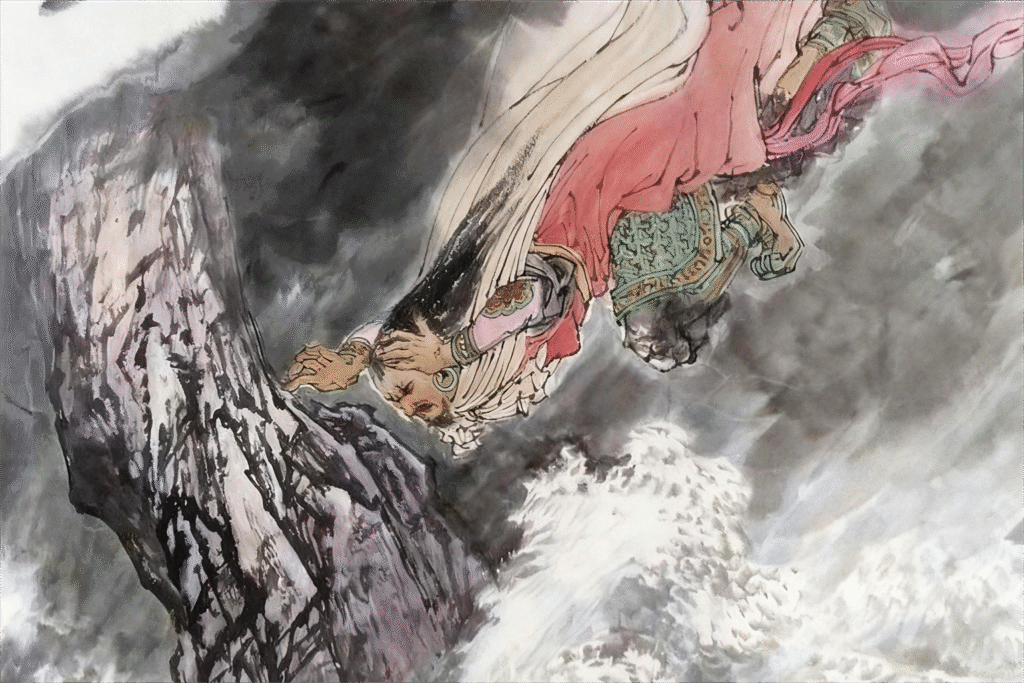

In the ancient days when mountains still breathed mist and the seas spoke in thunder, there lived Jingwei, once the bright and curious daughter of the Flame Emperor. One tragic day, while crossing the vast Eastern Sea, she was claimed by the raging waves and never returned to the mortal world. Yet her spirit did not fade. From sorrow she was reborn as a small yet fierce bird with patterned wings and a cry filled with longing and resolve. Gazing at the boundless waters that had taken her life, Jingwei swore an eternal vow: to fill the sea and tame its cruelty. Day after day, she flew between mountains and shore, dropping pebbles and twigs into the endless blue. Winds mocked her, waves swallowed her offerings, and centuries passed beneath her beating wings — yet she never faltered. Though her task seemed impossible, her determination carved itself into the heart of time. And so the world remembers: some battles are not fought to win, but to refuse surrender. From Jingwei’s undying resolve flows the spirit that even the smallest voice may challenge the vastest fate, and that a single vow, held steadfast, can echo louder than the sea itself.
In the age when immortals still walked beside humankind and the sky shimmered with divine secrets, there lived Chang’e, beloved wife of the archer-hero Houyi. When Houyi shot down the ten blazing suns to save the world, he was granted the elixir of immortality, a gift meant for both to share in time. Yet the halls of men trembled with envy, and one night a greedy hand reached for the sacred vial. To keep it from falling into wicked grasp and leaving the world leaderless, Chang’e drank the elixir herself — not for glory, but for duty and love. Light surged through her, weight left her steps, and sorrow shone in her eyes as her body lifted from the earth. She rose, drifting like a silken petal caught by heaven’s breath, higher and higher, until she reached the quiet silver palace of the moon. There she dwells, alone beneath eternal starlight, accompanied only by the gentle jade rabbit, gazing forever toward the world and the man she cherished. From her sacrifice came a legend of love beyond life, longing beyond distance, and a moon that glows not with cold light, but with memory. For every full moon whispers her name — proof that devotion may take us far, yet love will always look back toward home.
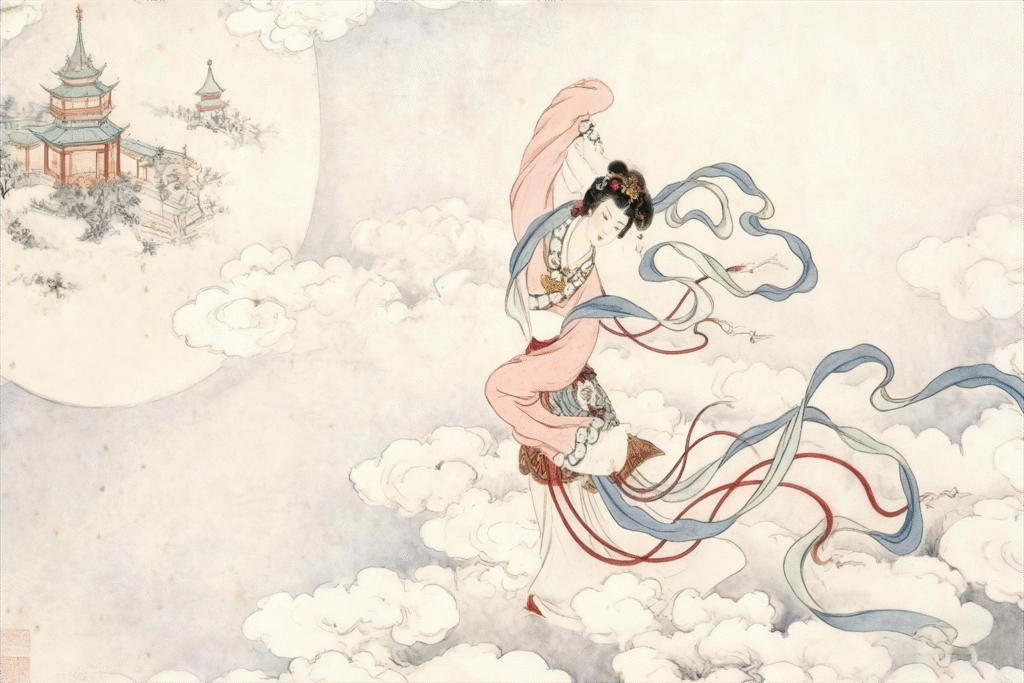

In the primordial age when the heavens had just claimed their ruler and mountains still carried the breath of gods, there rose Xingtian, a warrior who would not bend to fate. When the High God claimed dominion over all realms, Xingtian challenged the throne not for ambition, but for dignity — for the right of strength to stand unbowed before heaven. The clash shook the world: earth split, clouds burned red, and drums echoed like thunder across the ancient hills. But heaven’s wrath fell swift; Xingtian was struck down, his head severed and buried beneath the mountain’s weight. Yet death could not silence him. From his mighty body surged a will that defied the end — his chest became eyes, his belly a mouth, and with axe and shield he rose again. Blind yet seeing, slain yet unbroken, he swung his stone blade against the sky that denied him and beat his drum against destiny itself. Though no victory crowned his struggle, his spirit carved itself into the bones of the world. And so the myth endures: some gods fall, yet never kneel — and in the shadows of forgotten mountains, the heartbeat of rebellion still echoes, remembering the warrior who would not accept defeat.
In the earliest dawn of the world, when mountains breathed mist and stars still trembled with youth, a great calamity shattered heaven’s vault. Fire raged across the earth, waters roared unchecked, beasts cried in terror, and mortals trembled beneath the falling sky. From among the ancient divine beings rose Nuwa, mother of life, she who shaped humankind from the living clay. Seeing the world she loved break and the fragile beings she created suffer, she vowed not to watch fate devour creation. Across the wild land she gathered five sacred-colored stones, each pulsing with the breath of the cosmos, and melted them in a celestial furnace until they glowed like newborn suns. With her divine hands she mended the torn sky, sealing cracks with radiant fragments of eternity. She cut the legs from the great turtle to hold up the heavens, tamed floods, calmed raging fire, and soothed the trembling earth. When her labor was done, silence returned — not the silence of desolation, but the quiet after salvation. And so the world endured, carried by the mercy and strength of one goddess who refused to let creation fall. From her grace came life’s second dawn, and to this day the sky bears faint seams of light — the immortal scars of a creator who healed the heavens with love and sacrifice.


In the age when the earth was wild and sickness roamed freely among mortals, Shennong, the Divine Farmer, walked the untamed lands with a heart of compassion and hands guided by wisdom. He tilled the soil to teach humans to sow and harvest, bringing life from the fertile earth, yet his care extended beyond hunger. To understand the power of nature and to heal his people, he tasted every root, leaf, and flower, enduring poison and pain without fear, recording the secrets of each herb in his mind. Day after day, mountain after mountain, he braved the unknown, transforming bitter and deadly plants into remedies that would save countless lives. Though some trials brought his own body to the brink of death, his spirit remained unwavering, and his knowledge spread across the land like rivers of light. From his courage and sacrifice came the first medicines, the first cultivated fields, and the enduring wisdom that humanity carries still — the gift of a god who gave himself so life could flourish, and whose legacy roots itself in every healing herb and every grain that feeds the world.