What Is Agate?
Agate is a form of chalcedony in the quartz family. Its main chemical composition is silicon dioxide, or SiO2, but inclusions, trace elements, structure, and treatments can change its appearance.
Traditional mineralogical definitions usually emphasize banding: layers of chalcedony that create curved, concentric, horizontal, or other visible patterns. Commercial gemstone terminology is broader. Some established materials sold as agate, including Moss Agate, may lack obvious conventional bands and are recognized instead by their inclusions and overall appearance.
For a jewelry buyer, agate is a fine-grained quartz material valued for its patterns, colors, smooth polish, and suitability for many designs.
Agate, Chalcedony and Quartz
Quartz can form as large visible crystals or as extremely fine intergrown crystals. Chalcedony is the fine-grained form; agate describes patterned varieties of chalcedony.
These terms describe related levels of the same material family rather than three unrelated stones. “Agate gemstone” and “agate stone” are both common consumer descriptions, although agate is technically a variety within the quartz family rather than a separate mineral species.
How Does Agate Form?
Agate commonly develops inside cavities or fractures in existing rock. Silica-rich fluids or material enter these spaces, and fine quartz-rich layers gradually accumulate along the walls or around earlier structures. Changes during growth can produce contrasting bands, color zones, crystals, or mineral inclusions.
Volcanic-rock cavities are common formation settings, but agate occurs in other environments too. The precise processes behind different structures remain complex, so no single simplified account explains every agate.
What Does Agate Look Like?
There is no single agate color or pattern. Agate may be colorless, white, gray, brown, red, orange, yellow, black, blue, or green, and several colors can appear within one stone or bracelet. Some pieces are softly translucent; others contain cloudy or opaque areas.
Bands, Inclusions and Translucency
Visible banding is characteristic of agate, but it is not equally obvious in every commercial variety. Bands may be parallel, concentric, irregular, or arranged in lace-like loops. Cutting direction can also reveal different patterns in the same rough material.
Other agate varieties are recognized by inclusions. Dendritic markings resemble branches or ferns, while moss-like, plume-like, or landscape-like structures can appear suspended inside translucent chalcedony. These are mineral formations, not trapped plants.
Why Agate Has Different Colors and Patterns
Trace elements, iron and manganese compounds, included minerals, and differences in translucency add color and contrast. The formation sequence helps determine how those features are arranged.
Two beads cut from the same rough may not match exactly. Uneven bands or shifting color are not automatically flaws. Durability-threatening cracks, damaged drill holes, and poor polish are separate quality concerns.
Common Types of Agate
Agate has many geological, regional, and commercial names. These broad groups explain much of what jewelry buyers see.
- Banded and lace agate: These stones show distinct layers, stripes, loops, eyes, or lace-like curves. Contrast and pattern sharpness vary from subtle to dramatic.
- Moss and dendritic materials: Mineral inclusions create branching, feathery, or landscape-like forms. Our guide to moss agate meaning and properties explains this trade family in more detail.
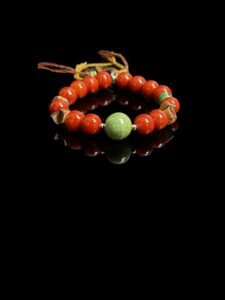
- Red and Nanhong Agate: Red agate covers a broad color category. Nanhong is a specific Chinese trade and cultural name used for distinctive red agate material; see what Nanhong agate is for its origin context and buying considerations.
- Dark and Black Agate: Dark gray, brown-black, and black-looking material may show banding or more uniform color. Commercial labels and treatments vary, so read our guide to black agate meaning and appearance and the concise Black Agate vs Black Onyx comparison before relying on a name alone.
Agate Properties and Durability
Property | Typical description |
Material family | Chalcedony in the quartz family |
Main composition | Silicon dioxide, SiO2 |
Mohs hardness | Approximately 6.5–7 |
Transparency | Commonly translucent, but may include opaque or clearer areas |
Luster | Waxy when unpolished; often glassier after polishing |
Common appearance | Bands, clouds, color zones, dendrites, plumes, or other inclusions |
Jewelry suitability | Well suited to beads, cabochons, pendants, bracelets, and carvings |
An agate hardness of about 6.5–7 provides reasonable everyday scratch resistance. It is not impact-proof: a bead can chip or fracture when dropped or struck.
Jewelry durability also depends on clean drill holes, even polish, suitable cord or wire, secure findings, and thoughtful bead spacing.
Natural, Dyed and Treated Agate
Because “natural” can be ambiguous, separate four questions: What is the material? Is its color natural? Has it been treated? Is it an imitation?
Genuine agate can have naturally formed color, but genuine chalcedony can also be dyed or color-enhanced. Dyed agate is treated gemstone material; it is not automatically fake. Likewise, vivid color does not by itself prove that a stone was dyed because some natural agates are strongly colored.
Photos reveal pattern, polish, and bead matching, but usually cannot establish treatment status. See how to tell if agate is real for a fuller material and imitation checklist.
Material Identity vs Color Treatment
A listing that says “real agate” answers only the material question if the description is accurate. It does not necessarily mean the color is untreated. Sellers should avoid using “natural” ambiguously and should distinguish genuine material from natural color when that information is known.
What Sellers Should Disclose
A useful description should identify the material and mention known dyeing or color enhancement. For higher-value jewelry, ask the seller if treatment information is unclear. Laboratory documentation should only be advertised when it accompanies the piece.
Why Is Agate Used in Jewelry?
Agate combines practical durability with visual variety. It takes a smooth polish, and cutters can emphasize bands, inclusions, color transitions, or landscape-like scenes. It suits beads, cabochons, pendants, rings, carvings, and bracelets.
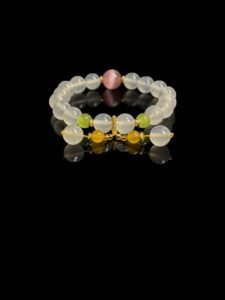
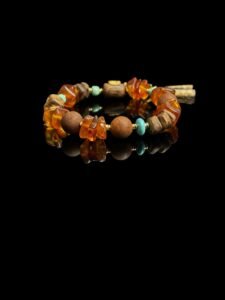
In an agate bracelet, every bead contributes to the overall design. A maker may arrange similar beads for a calm, consistent look or use controlled variation to create movement and contrast. Yun Agate’s handmade agate bracelets also combine agate with other natural materials and Chinese mythology-inspired design details.
How to Choose Agate Jewelry
Examine the Actual Product Photos
Prioritize listings showing the actual piece from several angles. Neutral-light close-ups reveal color, pattern, polish, drill holes, and visible fractures. Yun Agate uses real product photography so buyers can assess the pieces shown.
Look at Natural Stone Variation
Natural agate often shifts in tone, translucency, band thickness, or inclusion density. Decide whether that variation looks intentional and whether the seller uses actual-piece or generic sample images.
Check Material and Treatment Information
Look for a specific material description rather than only “crystal,” “natural stone,” or a color name. Check whether known treatments are disclosed. “Treatment status unknown” is more trustworthy than an unsupported untreated claim.
Evaluate Polish, Drilling and Bracelet Construction
A good polish should be even, without rough patches or residue. Examine drill holes for chips and stress fractures. Also consider cord thickness, knot protection, bead weight, spacers, and contact between mixed materials.
Yun Agate designs, handcrafts, and assembles jewelry in Fuxin, China, with close attention to bead arrangement and natural stone variation. This describes the craftsmanship location; it does not mean every material is mined in Fuxin.
Confirm Size and Return Terms
Check bead diameter and finished bracelet size instead of judging scale from close-ups. Confirm wrist measurement, resizing options, and return terms before ordering.
Agate Meaning and Symbolism
Agate meaning varies across cultures, historical periods, and modern crystal traditions. It is commonly associated with balance, steadiness, protection, strength, grounding, and good fortune. Some people choose particular colors or patterns because those symbolic ideas feel personally meaningful, while others wear agate simply for its natural beauty and craftsmanship.
These associations are cultural beliefs and personal interpretations, not scientifically established effects. They may enrich a piece’s personal significance, but they do not alter its measurable physical properties. An agate bracelet should not be presented as a medical treatment or as a guarantee of emotional change, luck, protection, or spiritual results. Yun Agate uses Chinese mythology as contemporary design storytelling, allowing the stone’s appearance and a mythological theme to contribute meaning without treating symbolism as gemological fact.
How to Care for Agate Jewelry
Wipe agate with a soft cloth after wearing it. When appropriate for the complete piece, use lukewarm water, mild soap, and a soft brush, then dry it thoroughly. Avoid harsh chemicals, prolonged exposure to strong solvents, and hard impacts.
Mixed-material jewelry may require gentler care than the agate alone. Follow our full guide on how to care for agate jewelry for bracelets that include wood, metal, cord, Liuli, or other gemstones.
Frequently Asked Questions
Is agate a stone or a gemstone?
Agate is a naturally occurring stone material and is considered a gemstone when selected, cut, polished, or carved for jewelry and decorative use.
Is agate a type of quartz?
Yes. Agate is a patterned form of chalcedony, which consists mainly of extremely fine quartz-rich material with the chemical composition SiO2.
Does agate always have visible bands?
No. Traditional definitions emphasize banding, but some established commercial varieties called agate, such as Moss Agate, may not show conventional visible bands.For a closer visual comparison, see our guide to Tree Agate vs Moss Agate.
Is dyed agate still real?
It can be. Genuine agate or chalcedony that has been dyed remains real gemstone material, but its color is treated and known treatment should be disclosed.
Is agate durable enough for everyday jewelry?
With a Mohs hardness of approximately 6.5–7, agate has good everyday scratch resistance. It can still chip or fracture from strong impacts, and the construction of the jewelry also affects durability.
Is agate expensive or rare?
Agate as a broad material family is relatively common, but price varies with pattern, color, size, origin documentation, treatment, cutting, craftsmanship, and the quality of the finished jewelry. The variety name alone does not determine value.